Author: opzvje

  • How to Get a Flawless Slicked-Back Bun—With Photos and Videos

    How to Get a Flawless Slicked-Back Bun—With Photos and Videos

    Allure Editors in slickedback bunsSave StorySave this storySave StorySave this story

    A slicked-back bun looks simple. In theory, you create one by just pulling your hair back and twisting it into a knot. Voilà: instant model-off-duty elegance, right?

    In reality, you’re standing in front of a mirror a half hour after you were supposed to be out the door with a mysterious bump and countless flyaways. The entire point of the style is for every strand to look intentionally (and impossibly) in place, which can make achieving it feel like a test of both patience and upper-body strength.

    Despite the frustrations that come with creating one, a truly sleek bun doesn't require growing a third arm and relentless yanking of your strands. The right styling products and tools from prep to finish will do most of the work. We spoke with hairstylists and Allure editors who regularly wear their hair in the updo about what makes the difference between a smooth, polished bun and a messy, uncooperative lump. Ahead, they break down exactly which products to use at each step, with tips tailored to different hair types.

    Meet the experts

    • Taylor Carter is a hairstylist based in Boston.
    • Justine Marjan is a hairstylist based in Los Angeles.
    • Chris Russell is a hairstylist based in Los Angeles.
    • Mandee Tauber is a hairstylist and principal artist of global content at Oribe.
    • Kee Taylor is a hairstylist based in Philadelphia.

    Prep

    To get the best results, you can’t just jump into yoinking back your strands. If you prioritize the prep process and tailor it to your hair type, you can help ensure a smoother experience with less damage. Hairstylist Chris Russell recommends first spritzing your strands with a heat-protectant spray, then rough-drying your hair. (The Bumble and Bumble Heat Shield Thermal Protection Hair Mist is one of our favorites for reducing frizz and defending against breakage.) Then he suggests running a thermal brush (like the Sutra IR Infrared Thermal Brush) through your hair, saying it helps ensure “even texture, controlled shine, and a seamless finish before pulling your hair back.”

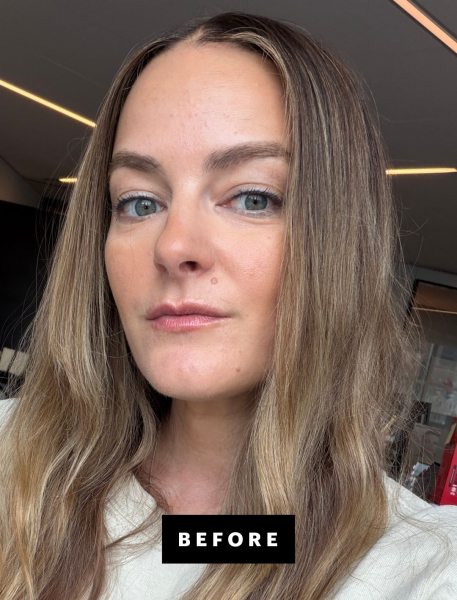
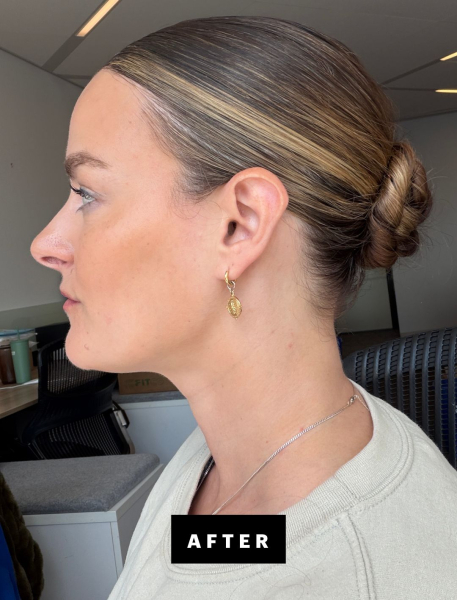
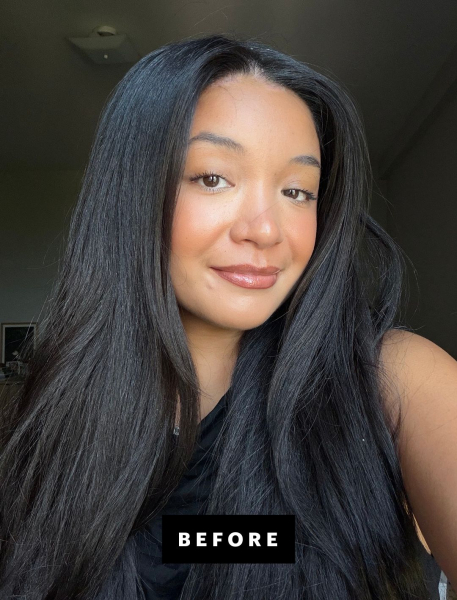
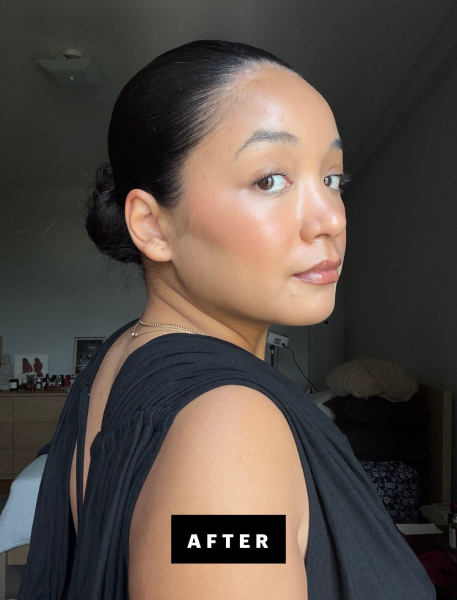
    Our resident slicked-back-bun pros and Allure editors don’t all reach for a hot tool after drying their hair. Allure content director Sophie Panych, whose hair is naturally fine and straight, will occasionally touch things up with a flat iron. Social media manager Bianca Richards, who blew out her thick, naturally wavy hair before creating her slicked-back bun, says she reaches for the Wavytalk Thermal Brush for added sleekness. Commerce production assistant Hailey Roy, who has 3C curls, actually skips a hot tool altogether. “I’ve always done slicked-back buns with my natural hair,” she says, adding that she tries her best to keep her strands away from heat.

    Content director Sophie Panych creates her middle part

    Social media manager Bianca Richards smooths her hair with a thermal brush

    Commerce production assistant Hailey Roy massages hair oil into her curls

    If your hair is feeling dry, hairstylist Kee Taylor recommends smoothing a lightweight oil through the midlengths and ends to improve manageability and shine. “A little goes a long way, especially on finer hair,” she says. (Roy likes to go in with Rōz Santa Lucia Heat Protectant Styling Hair Oil to lock out humidity and add shine.) Hairstylist Justine Marjan also suggests keeping curly-coily hair slightly wet with water to help with detangling and pulling it back with a wide-tooth comb.

    Pull your hair back

    Panych uses two types of brushes to pull back her hair

    Richards uses a comb and brush to pull back her hair

    Roy separates her hair into two sections with a comb before pulling it back

    Ask any of the stylists for the biggest mistake people make when creating a slicked-back bun, and you’ll hear the same answer: trying to brush everything back in one pass. Instead, they recommend building the style section by section. How you do so is up to you, but hairstylist Mandee Tauber has a few tips: She suggests starting by creating a radial part from the crown of your head to the tops of the ears, dividing the hair into a top and bottom section, before styling the bottom first while the top remains clipped up. Roy finds that the pointed end of the Donna Professional Parting Pin Tail Comb makes it easy to create even sections.

    On straight or straightened hair, Tauber applies a pomade stick (we love BondiBoost Strawberry Gum Grip Styling Stick for its ability to create hold without flakiness) directly along the hairline before using a boar bristle brush (like the Denman D81M Style & Shine Hair Brush), focusing on “condensing and refining” the hair with long, controlled strokes. “Boar bristles create the tension needed to stretch and smooth the strands,” Taylor explains.

    Richards uses a comb and a brush—the Cécred Parting Tail Comb and La Bonne Brosse N.01 The Universal Brush—to ensure nothing pokes out. Once the first section is smooth, she secures it into a small ponytail with an elastic before releasing the top section and repeating the process.

    For curly and coily hair, Taylor advises working in even smaller sections, “smoothing each one individually before gathering everything together. This helps preserve control without overworking the hair.” Instead of a pomade stick, Tauber recommends using Oribe Gel Sérum on coils, applying a generous amount around the hairline before smoothing it back with a boar bristle brush. If additional hold is needed, Marjan recommends spraying Paul Mitchell Firm Hold Super Clean Extra Hairspray on the roots and brushing back before wrapping a second elastic around everything.

    That may seem like a lot of product, but it’s actually the healthier approach, according to Taylor. “The key is to let the brush and styling product do most of the work rather than pulling excessively tight,” she says. That way, you avoid unnecessary stress on the scalp.

    Russell likes to position the ponytail at the crown with the direction of the hair running parallel to the cheekbones. He says the higher placement creates a natural lifting effect and gives the face “a more sculpted, snatched appearance.” That said, a slicked-back bun works both high and low, so placement is a matter of personal preference.

    Make adjustments

    Richards uses hair oil to smooth her ponytail

    Before turning the ponytail into a bun, hairstylist Taylor Carter recommends preparing it for volume. She dusts texturizing powder (we’re fans of IGK Beach Club Texture Powder because it disappears into hair while encouraging oomph) throughout the ponytail before teasing small sections individually. Once the interior has enough fullness, she lightly smooths only the outside layer and finishes with Color Wow Pop & Lock Serum. Richards loves E.L.F. Gloss Mode Treatment Oil for giving hair that extra-gleaming look. The technique creates extra grip while maintaining a shiny exterior and preventing the bun from looking flat.

    If you’re after a more compact bun, Tauber suggests that those of you with straighter hair brush your chosen wax or gel stick through the length of the ponytail. On curly or coily hair, she says to lightly mist the ponytail with water before applying a hair gel. (We like Odele Flex Hair Gel for its ability to keep hair sculpted without getting rock-hard.)

    This is the time to make tweaks. “Detailing the hairline is what takes a sleek bun from good to great,” he says. Before twisting your ponytail into a bun, he says to use a flat iron to refine the hairline before perfecting baby hairs with a toothbrush-like detailing tool. The Tymo Flaight Holo iron and the DAE Dual-Edge Styling Brush make a winning team for this—the iron fights frizz without tugging, while the synthetic boar-like bristles of the teensy-tiny brush erase flyaways.

    Wrap and secure your bun

    Richards secures her bun with an elastic

    Roy twists her ponytail into a bun and secures it with an elastic

    Although every stylist we spoke with twists the ponytail before wrapping it into a bun, the way they build and secure that bun varies depending on hair texture and the end result they’re after.

    Tauber twists the entire ponytail into one tight rope before wrapping it around the base. On straighter hair, she tucks the ends underneath and secures the bun with a large U-pin, weaving it through the outer edge of the bun, into the base, and back through the bun so it provides support while remaining virtually invisible. For curly and coily hair, she skips the U-pin, wrapping a large elastic around the completed bun instead.

    Panych, who has a background in dance and years of creating ballerina buns under her belt, takes what she considers a more streamlined approach to creating the bun: Instead of separating her hair into two ponytails, she splits a single ponytail into two parts. "In ballet, you don't want this big, knob-like donut thing on your head," she says. "Separating the ponytail helps it lie flatter." After dividing her ponytail and clipping up one section to keep it out of the way, she starts twisting the other section and wraps it around the elastic, doing almost a full loop. She then unclips the other section and begins twisting it into the first, continuing the wrapping process and pinning with U-pins as she goes. “I find that it keeps it more secure because you've got both internal and external pins.”

    Panych separates her ponytail into two sections, twists them into a bun, and secures her style with U-pins

    Russell intentionally leaves the last inch or two of the ponytail exposed after wrapping the bun. “I like giving it a little personality,” he says. “It keeps the look modern.”

    Finish

    The final step is about adding hold and refining the details that make a slicked-back bun look professionally styled. Taylor applies a few drops of Cécred Restoring Hair & Edge Drops to smooth frizz and add shine without stiffness, while Carter finishes with Davines This Is a Dry Wax Finishing Spray, which locks the bun itself into place while preserving a soft texture. Richards likes to touch up her hairline with the Rizos Curls Sleek Styling Cream + Taming Wand, and Roy gives the base of her hair a final slick-down with Got2B Glued Styling Spiking Glue.

    For coily hair, Marjan offers one extra tip: “After styling, sometimes I like to wrap the hairline in a silk scarf for at least 20 minutes to set the style and prevent any frizz or flyaways.”

    Sophia PanychPanych has naturally straight hairCourtesy of subjectSophia Panych profile view of a slick bunPanych wearing a sleek, middle-parted bunCourtesy of subjectBianca RichardsRichards has naturally thick, wavy hairCourtesy of subjectBianca Richards wearing a sleek bunRichards wearing a sleek bunCourtesy of subjectHailey RoyRoy has 3C curlsCourtesy of subjectA profile view of Hailey Roy's sleek bunRoy wearing a mid-height slicked-back bunCourtesy of subject

    These hairstylist- and editor-approved methods take the guesswork out of a slicked-back bun, but remember: It still requires some practice before you can go on autopilot. As long as you don’t give up after a few frustrating styling sessions, you’ll find yourself wearing an expert-level sleek bun on a regular basis.

  • 6 Best Travel Hair Dryers to Simplify Packing

    6 Best Travel Hair Dryers to Simplify Packing

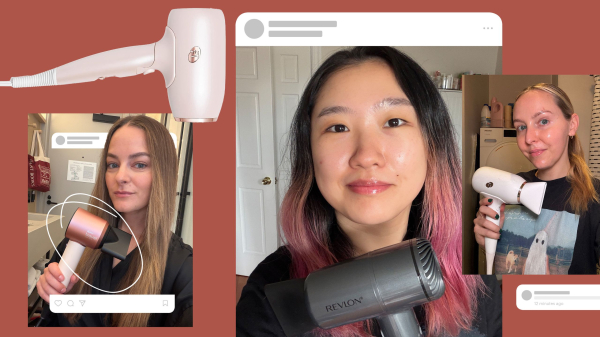
    A collage of women holding travel hair dryers and hair dryers on a dark pink backgroundCollage: Jemeria Davison; Source images: Courtesy of Allure editors and brandsSave StorySave this storySave StorySave this story

    If you’ve ever encountered a screaming-loud hotel dryer, then you might already know that packing one of the best travel hair dryers can be a game-changer for your styling routine. Whether you’re flying overseas or heading on a road trip, a travel blow-dryer can save suitcase space while still delivering the powerful, consistent heat styling you need for polished hair on the go. The top-tested options pair compact designs with fast drying power and universal voltage, so you don’t have to sacrifice your style for the sake of portability. Even better: Many travel blow-dryers even feature foldable handles, so they can easily fit in a carry-on bag or duffel.

    But is it actually worth buying a dedicated blow-dryer just for travel? If you’re on the road often, can’t bear the thought of air-drying, or already have an established routine you swear by, then yes, it’s worth the investment. “Hotel dryers tend to be inconsistent in both heat and airflow, which can lead to more damage or less predictable results,” says Jay Small, a hairstylist based in Los Angeles. Depending on its features, a travel dryer can give you more control over the heat and airflow settings, which helps you maintain healthier hair. And if you’re traveling internationally, just remember to bring an adapter and you’re in business.

    Our Top Travel Blow-Dryers

    • Best Overall: T3 Afar Travel Dryer, $200
    • Best for Damaged Hair: Dyson Supersonic Travel, $300
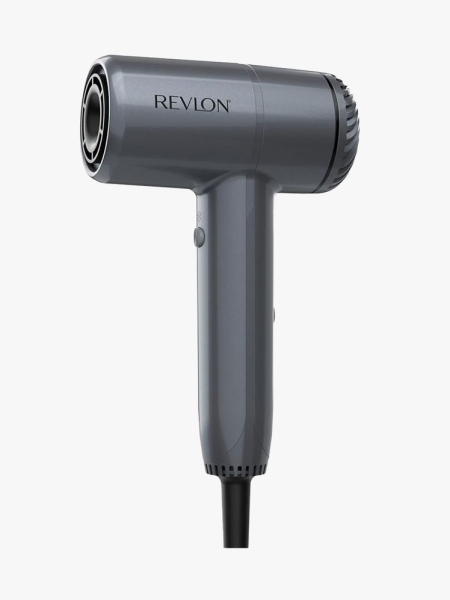
    • Best Drugstore: Revlon PowerMove Hair Dryer, $90
    • Best for Thick Hair: SRI Labs DryQ Smart Hair Dryer, $300

    From quick weekend trips to long-haul vacations, a reliable travel blow dryer can ensure your look remains on point. Ahead, discover our favorite travel blow-dryers that are lightweight, dry hair quickly, and pack (pun intended) the power.

    Frequently Asked Questions

    • Which features are important to look for when shopping for a travel blow-dryer?
    • How to use a hair dryer correctly, without damaging your hair
    • Meet the experts
    • How we test and review products
    • Our staff and testers

    Best Overall: T3 Afar Travel Dryer

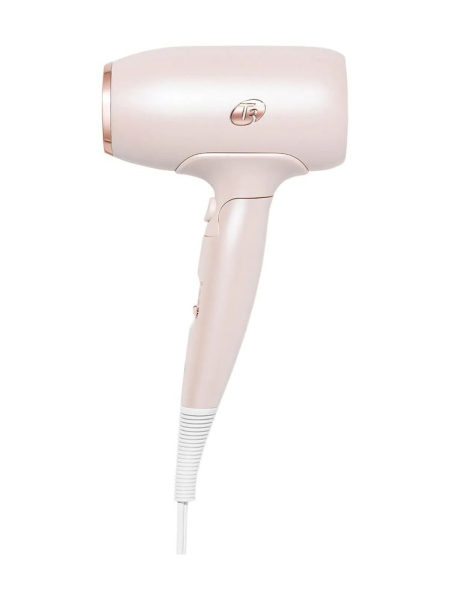
    T3 Afar Lightweight Travel Size Hair Dryer mini pale pink hair dryer on white backgroundSave to wishlistSave to wishlist

    T3

    Afar Lightweight Travel Size Hair Dryer

    $200 $170 (15% off)

    Amazon

    $200

    Nordstrom

    $200

    Ulta Beauty

    Allure beauty director Sarah Kinonen using the T3 Afar Travel Dryer

    Sarah Kinonen

    Why we love it: When it comes to a travel blow-dryer, the T3 Afar Travel Dryer is as close to perfect as it gets. Not only is it a 2023 Best of Beauty winner, but it’s an expert favorite, too, since it balances serious power with portability. “It’s compact but still delivers strong airflow with good heat control, which is key for preventing damage,” Small says. “It also has dual voltage, making it a reliable option for international travel.” It may be small, but it doesn’t skimp on features, either; it comes with ionic technology, a foldable handle, a cool shot button, multiple heat and speed levels, and a concentrator attachment for smoothing.

    Kinonen before using the T3 Afar Travel Dryer

    Kinonen before using the T3 Afar Travel Dryer

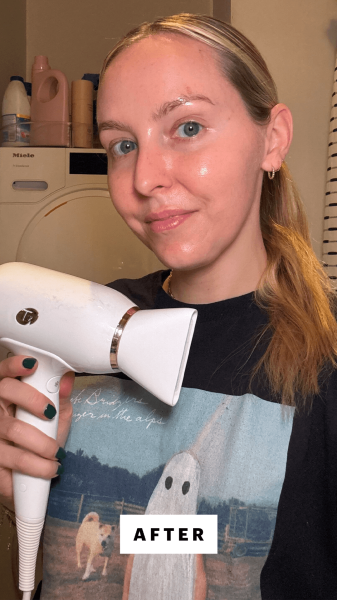
    Sarah KinonenKinonen after using the T3 Afar Travel Dryer

    Kinonen after using the T3 Afar Travel Dryer

    Sarah Kinonen

    Tester feedback from beauty director Sarah Kinonen

    AccordionItemContainerButtonLargeChevron

    “I rarely use hot tools, but when I do, it has to be something I can quickly grab, doesn't weigh my down arm (my 8-pound dumbbells already have that covered), and works fast. The T3 Afar Travel Dryer does all of the above—and more. More, in my household, means that it also works on my mini Bernedoodle's shaggy fur 😉 Unlike my dog Bernie's fluffy, wavy fur, I have fine, straight, and flat hair, so blow-drying doesn't take me long at all. And with this tiny tool, I'd say drying my entire head—when starting with damp strands and a few sprtizes of heat protectant—takes less than five minutes. Usually, it's more like three minutes. I rough-dry and skip out on round brushes (or any tools at all), which makes the process even quicker. The result is always freshly dried (but never fried) hair with a bit of (temporary) volume.” —Sarah Kinonen, beauty director

    More to know

    AccordionItemContainerButtonLargeChevron

    • Weight: 12.2 oz
    • Speed settings: 2
    • Heat settings: 3
    • Dual voltage: yes
    • Attachments: concentrator

    Best for Damaged Hair: Dyson Supersonic Travel

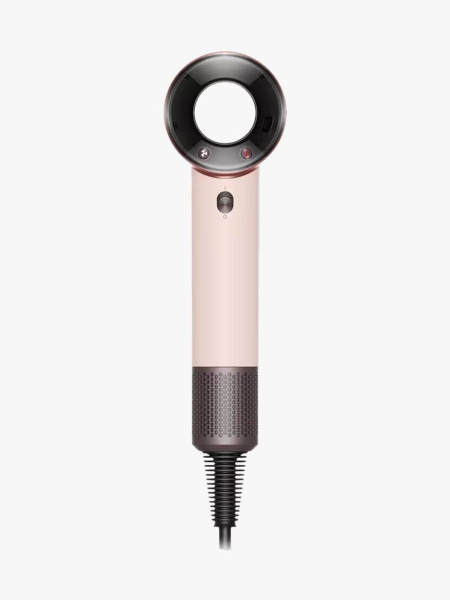
    Pink Dyson Supersonic Travel on a white backgroundSave to wishlistSave to wishlist

    Dyson

    Supersonic Travel

    $300

    Amazon

    $300

    Nordstrom

    $300

    Ulta Beauty

    Allure content director Sophia Panych using the Dyson Supersonic Travel

    Sophia Panych

    Why we love it: The original Dyson Supersonic consistently earns the top spot in Allure’s blow-dryer testing, thanks to intelligent heat control (which measures the blow-dryer’s air temperature more than 40 times per second to minimize damage), its quieter sound, noticeably faster drying time, and a smaller, lighter motor than other picks. Simply put, “it’s lightweight and engineered to regulate temperature extremely well,” says Small. “If you’re serious about protecting hair quality, it’s one of the best tools available.”

    So when the British company came out with a travel-sized version, we were intrigued. The Dyson Supersonic Travel is much like the first iteration, with the same mighty intelligent heat control to protect hair, shine-boosting technology, and fast styling, but now boosted as a smaller and even lighter dryer. Measuring roughly the size of a standard plastic water bottle, it’s 25 percent lighter and 32 percent smaller than the original Supersonic. It also features automatic dual voltage, which other Dyson Supersonic dryers don’t have. It only comes with one concentrator attachment, but if you already have an existing full-size Supersonic, you can use the same attachments you already own.

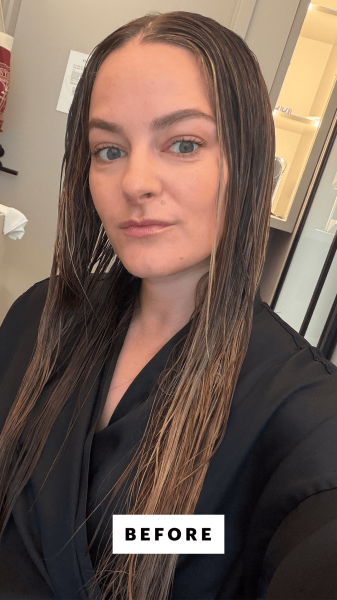
    Panych before using the Dyson Supersonic Travel

    Panych before using the Dyson Supersonic Travel

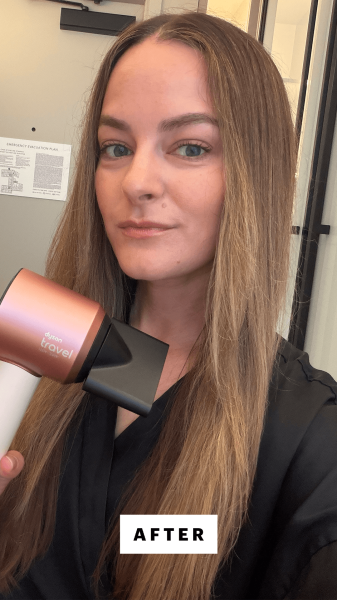
    Sophia PanychPanych after using the Dyson Supersonic Travel

    Panych after using the Dyson Supersonic Travel

    Sophia Panych

    Tester feedback from content director Sophia Panych

    AccordionItemContainerButtonLargeChevron

    “I have been burned by travel blow-dryers before. No, literally. The amount of travel hot tools I've plugged into outlets in the UK and Europe that have immediately sparked and smoked resulted in me just not traveling with hot tools at all. I was skeptical that the Dyson Supersonic would be any different, so you can imagine my excitement when I inserted the US plug into the outlets in my London flat (with an adaptor of course) and came away with smooth, dry hair and not a fire hazard. The two heat and two fan settings are strong enough to efficiently dry hair—not as fast as the full-size version, but fast enough—and I love that it's compatible with the attachments for the regular-size Supersonic (the nozzle and the diffuser … I tried both). And I prefer the shape to the foldable travel dryers I've had in the past; the slim packaging means it's easy to tuck between shoes or packing cubes. My only note? It doesn't leave your hair as silky and frizz-free as the regular Supersonic, most likely due to the fact it's not as powerful.” —Sophia Panych, content director

    More to know

    AccordionItemContainerButtonLargeChevron

    • Weight: 0.7 lbs
    • Speed settings: 2
    • Heat settings: 3
    • Dual voltage: yes
    • Attachments: concentrator

    Best Drugstore: Revlon PowerMove Hair Dryer

    A gray Revlon PowerMove Hair Dryer on a white backgroundSave to wishlistSave to wishlist

    Revlon

    PowerMove Hair Dryer

    $90 $71 (21% off)

    Amazon

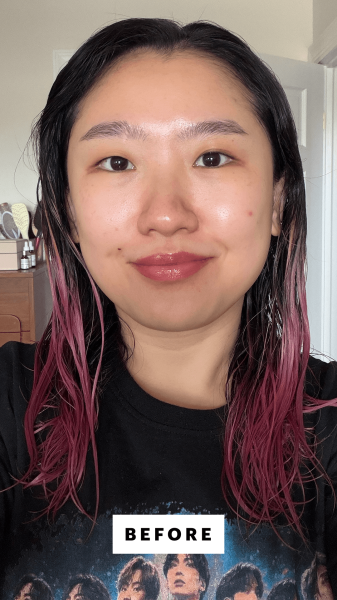
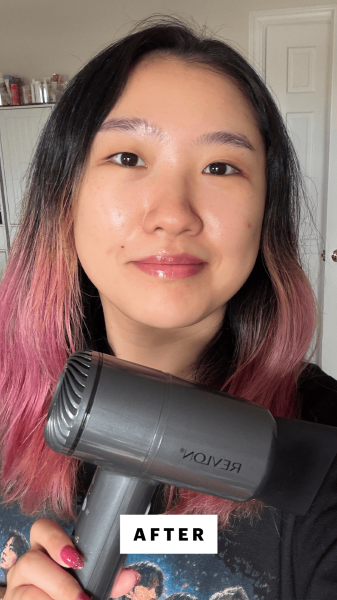
    Allure commerce editor Sarah Han using the Revlon PowerMove Hair Dryer

    Sarah Han

    Why we love it: Revlon’s nifty dryer gives the results of a full-size blow-dryer but at just about half the size (it weighs just over half a pound, making it the lightest option on this list). But don’t let that fool you: The Revlon PowerMove Hair Dryer covers all your bases with features that you might expect on a much pricier (and heavier) model. The high-speed airflow dries hair quickly and minimizes frizz, while an advanced brushless motor keeps the dryer much quieter than others. With three speed settings and three heat settings (plus a cool mode), you can customize the experience to your hair’s needs.

    Han before using the Revlon PowerMove Hair Dryer

    Han before using the Revlon PowerMove Hair Dryer

    Sarah HanHan after using the Revlon PowerMove Hair Dryer

    Han after using the Revlon PowerMove Hair Dryer

    Sarah Han

    Tester feedback from commerce editor Sarah Han

    AccordionItemContainerButtonLargeChevron

    “Hotel blow-dryers leave much to be desired, which is why Revlon's PowerMove has me contemplating packing my own for the first time in my life. It takes up little space in a carry-on (or duffel, if we're going that route) and is actually 0.5 pounds lighter than my usual at-home dryer. (Less of an arm workout? Heck yes.) Despite the compact size, it really does pack a punch. I was dubious at first because I'm used to my expensive dryers, but it dried my whole head of thin yet dense hair in around the same time as my full-size tool. With the right heat-protectant spray, that cuts down to 7 minutes.” —Sarah Han, commerce editor

    More to know

    AccordionItemContainerButtonLargeChevron

    • Weight: 0.6 lbs
    • Speed settings: 3
    • Heat settings: 3
    • Dual voltage: yes
    • Attachments: concentrator

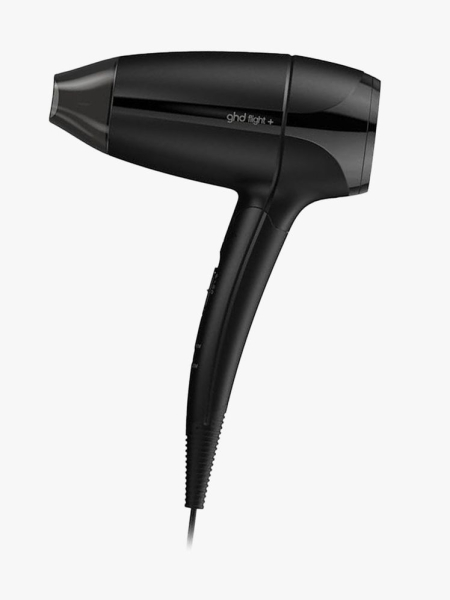
    Best Foldable: GHD Flight+ Travel Hair Dryer

    A black GHD Flight+ Travel Hair Dryer on a white backgroundSave to wishlistSave to wishlist

    GHD

    Flight+ Travel Hair Dryer

    $129 $110 (15% off)

    Amazon

    $129

    Nordstrom

    $129

    Bluemercury

    Why we love it: Though it doesn’t come with tons of bells and whistles, this GHD Flight+ Travel Hair Dryer has the necessities, including a lighter, smaller design than other GHD blow-dryers, a foldable handle, and even a carrying case. An extra benefit is that it has an auto shut-off setting, meaning that it automatically switches off when held too close to hair; this helps prevent overheating the hair and scalp, which can lead to more damage. That may be why this blow-dryer is a go-to for Carrie Prowant, a hairstylist based in Bettendorf, Iowa. Even though it’s a “more basic” dryer, says Prowant, she loves the ionic technology, variable speeds and temperature controls, and strong airflow.

    More to know

    AccordionItemContainerButtonLargeChevron

    • Weight: 0.99 lbs
    • Speed settings: 1
    • Heat settings: 2
    • Dual voltage: yes
    • Attachments: removable nozzle

    Best for Curls and Coils: Paul Mitchell Neuro Dry+ Folding Professional Hair Dryer

    A black Paul Mitchell Neuro Dry+ Folding Professional Hair Dryer on a white backgroundSave to wishlistSave to wishlist

    Paul Mitchell

    Neuro Dry+ Folding Professional Hair Dryer

    $250

    Ulta Beauty

    $250

    Walmart

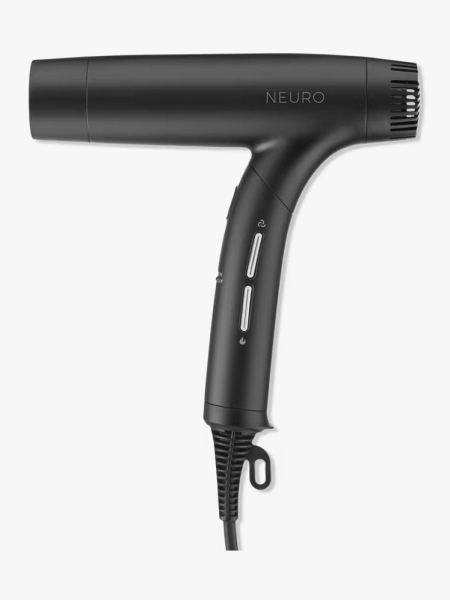
    Why we love it: The sign of a good travel dryer is when you use it 24/7, not just when you’re on the road. After purchasing it for a recent trip, Small has started using the Paul Mitchell Neuro Dry+ Folding Professional Hair Dryer in his salon for everyday styling because of its many features—which include several attachments, travel bag, multiple heat and speed settings, cleaning brush, and a blend of positive and negative ions to neutralize static and frizz.

    “This is not a compromise for the sake of being travel-size; it’s both a great dryer and convenient for travel,” he says. It’s also curl-friendly: It also comes with a diffuser (to define curls and waves) and smoothing pik (to stretch curls and coils), making it one of only two dryers on this list to include more than just a concentrator nozzle—and the only one to have a smoothing pik. To make it as easy as possible for both pros and the rest of us to use, the dryer also has a memory function to remember the last settings used, a 9-foot long cord for better reach, an auto sensor that automatically pauses airflow when you release the dryer’s handle.

    More to know

    AccordionItemContainerButtonLargeChevron

    • Weight: Less than 1 lb (exact weight not disclosed)
    • Speed settings: 3
    • Heat settings: 3
    • Dual voltage: yes
    • Attachments: styling nozzle, diffuser, smoothing pik (diffuser and smoothing pik only offered in the black colorway)

    Best for Thick Hair: SRI Labs DryQ Smart Hair Dryer

    A black and rose gold SRI Labs DryQ Smart Hair Dryer on a white backgroundSave to wishlistSave to wishlist

    SRI Labs

    DryQ Smart Hair Dryer

    $300

    Amazon

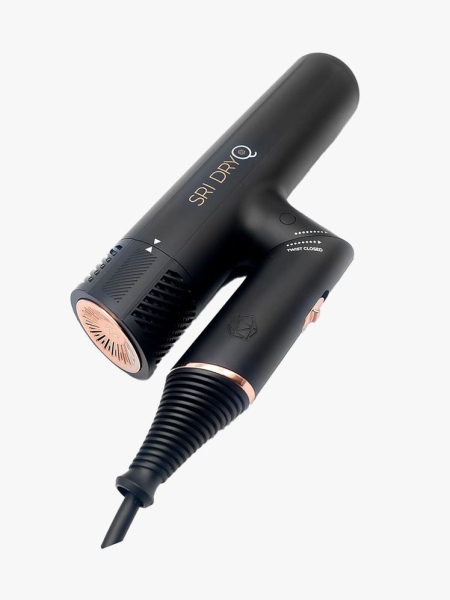
    Why we love it: Rather than sacrificing performance for portability, the SRI Labs DryQ Smart Hair Dryer does the opposite: Operating at 100,000 revolutions per minute—which is about the same RPM as other high-speed dryers like the Dyson Supersonic—the strong motor offers high-velocity drying, cutting down on dry time and allowing those with thicker hair to spend less time in front of the vanity.

    Beyond that, it’s jam-packed with innovative, thoughtful additions, like a foldable handle that makes it easy to travel with, negative ions to help reduce frizz that sometimes comes along with thick hair, continuous heat monitoring (though the brand doesn’t reveal the details of how often it checks the temperature), several magnetic attachments including two concentrator nozzles and a diffuser, and infrared light technology (which is thought to help with hair growth, but the jury is out on whether it actually works). It operates at a relatively quiet 79 decibels (traditional blow-dryers tend to operate around 80 to 90 decibels) to minimize that classic jet engine-like roar of some dryers. Though it’s a great travel companion, it’s equally great for day-to-day styling as well.

    Tester feedback from contributor Catharine Malzahn

    AccordionItemContainerButtonLargeChevron

    “I have thick, wavy, type 2b hair that can take a while to dry. I am always pleasantly surprised at how quickly this blow-dryer dries my hair (we’re talking just about 10 minutes, whereas typical hotel dryers I’ve used in a pinch takes upwards of 20 minutes). It does so with ease, leaving my hair incredibly shiny, smooth, and soft. I’m nowhere near an expert when it comes to styling my hair—I put in some heat protectant, grab a round or paddle brush, and start drying—but this dryer manages to make my hair almost as good as if it were in the hands of a professional. I use it both at home and on-the-go, so regardless of whether I’m traveling or not, I love the folding handle, lightweight design, and of course, how quiet it is.” —Allure contributor Catharine Malzahn

    More to know

    AccordionItemContainerButtonLargeChevron

    • Weight: 11.8 oz
    • Speed settings: 3
    • Heat settings: 3
    • Dual voltage: yes
    • Attachments: diffuser, narrow nozzle, wide nozzle

    Frequently Asked Questions

    Which features are important to look for when shopping for a travel blow-dryer?

    When shopping for the best travel blow-dryer, it’s essential to look beyond compact size and space-saving design and focus on key features like dual voltage, foldable handles, and adjustable heat and speed settings. They’re responsible for effortless, safe styling on the go without sacrificing performance. Here’s what the pros prioritize:

    • Multiple heat settings: For starters, go with travel blow-dryers that offer more than one temperature option. “I recommend looking for multiple heat and speed settings rather than a single high-heat option, since excessive heat is one of the fastest ways to compromise hair health over time,” says Small.
    • Strong airflow: Small and Prowant both recommend looking for consistent, controlled, and strong airflow. Specifically, Prowant says to keep an eye out for dryers that are 1200-1875 watts for strong enough airflow. Powerful airflow allows for faster dry time.
    • Ionic technology: Small notes the importance of ionic technology. Ionic dryers either offer a blend of positive and negative ions or solely emit negative ions, which results in faster dry times, reduced frizz, and increased shine.
    • Dual voltage: If you’re traveling internationally, dual voltage is essential; it prevents the dryer motor from burning out, smoking, or even catching fire. Without dual voltage, you cannot operate your dryer outside of the country. If you’ve accidentally plugged a 120V dryer from North America into a 220V outlet in Europe or Asia, you’ve already experienced the disappointment of a broken dryer. Some travel dryers have automatic dual voltage, while others require you to click a switch to toggle between voltages (look at your model to determine which is the case for you). FYI: Dryers don’t tend to come with an adapter, so you’ll have to pack your own.

    Other helpful additions are a foldable handle to save space both in your suitcase and on the counter and a removable lint filter to make cleaning out accumulated dust, hair, and styling products as easy as possible.

    How to use a hair dryer correctly, without damaging your hair

    Heat damage is a common concern when it comes to hairstyling, especially when hot tools are used often. It results in dull, frizzy, or rough-looking hair. However, it is possible to use a blow-dryer (whether it’s travel-sized or not) and minimize damage to your hair. It begins with the basics: “Start by removing excess water gently with a towel instead of rough drying,” says Small.

    Then, once it’s time to style, “apply a heat protectant—and don’t be afraid to layer the product if you have thicker, more coarse hair or are prone to frizz,” he says. Once you turn on the blow-dryer, “try to avoid using the highest heat setting unless absolutely necessary and be mindful to keep air flowing from the roots to the ends,” he adds.

    Keeping the airflow facing downward helps seal the hair’s cuticle, which results in smoother, shinier, and significantly less frizzy hair. “Keep the dryer moving rather than concentrating heat in one area, and try to maintain some distance between the dryer and your hair,” says Small. Doing so will help minimize damage.

    After you’re done drying and styling your strands, don’t skip the cool air. “When possible, finish with a cool shot to help lock your style and secure the cuticle into a smooth, light-reflecting position,” he says. Think of it this way: “Heat styles hair, cooling sets it,” Small explains.

    Meet the experts

    • Jay Small, a hairstylist based in Los Angeles
    • Carrie Prowant, a hairstylist and hair-extension specialist based in Bettendorf, Iowa

    How we test and review products

    We always enlist a range of testers for any review, but hair-care products and tools are another story. While some can be used across different hair textures, lengths, curl patterns, thicknesses, colors (natural and unnatural), and concerns, many are created with specific consumers and their needs in mind. When reviewing tools, we also take into account testers' experience levels. For instance, an innovative new blow-dryer may feature industry-leading technology, but if the only people who find it intuitive to use are professional hairstylists, we have to consider this when determining whether it is worthy of a recommendation.

    For our review of the best travel hair dryers, we enlisted the help of multiple editors, writers, contributors, and hairstylists. Testers considered performance across three primary categories: efficacy, safety and ease of use, and value. For more on what's involved in our reporting, check out our complete reviews process and methodology page.

    Our staff and testers

    A beauty product is a personal purchase. You might be searching for a face cream to address persistent dryness or a new nail product to add to your Sunday self-care routine; you may simply be browsing around for the latest launches to hit the hair market. No matter what you seek or your individual needs and concerns, Allure wants to ensure that you love anything we recommend in our stories. We believe that having a diverse team of writers and editors—in addition to the wide range of outside testers and industry experts we regularly call upon—is essential to reaching that goal.

    After all, can we really say a skin-care product is the "best" for people over 50 if the only testers we've solicited opinions from folks who have yet to hit 30? Can we honestly deem a high-end diffuser worthy of your hard-earned cash if it's never been tested on curls? We're proud that our staff spans a wide range of ages, skin tones, hair textures, genders, and backgrounds, which means that we are able to fairly assess any beauty product that comes into the beauty closet.

  • 9 Best Vegetal Perfumes 2026 That Are Always in Season

    9 Best Vegetal Perfumes 2026 That Are Always in Season

    Cosmetic bottles overlapping on a peach background. Center green angular bottle and clear round bottle with yellow...Collage: Laneen Wells; Source images: Courtesy of brandsSave StorySave this storySave StorySave this story

    Fancy a little wander through the garden? The harvest is here, and you can fill your basket—well, your perfume vanity, anyway—with its bounty: juicy tomatoes, crisp cucumbers, maybe even an earthy beet or potato straight out of the soil, because the best vegetal perfumes are like an aromatic, evocative trip to the farmers market.

    Vegetal perfumes are fragrances built around lifelike vegetable and plant notes, as well as the surrounding environment—like a tomato fresh from the vine, where you can smell not only the plump, orange-red veggie (fruit if you’re being technical, but I digress) itself, but also its fragrant stem and the dirt it grew from, or an herbal scent that smells like a handful of freshly harvested basil or mint leaves.

    “What makes [vegetal scents] unique is their realism and texture,” explains Patty Hidalgo, vice president perfumer at International Flavors & Fragrances (IFF). “They bring a sense of vitality and authenticity to fragrance, creating the impression of being in a garden, greenhouse, or natural landscape rather than simply smelling a decorative floral bouquet.” Hidalgo says that while vegetal scents are often considered part of the “green” fragrance family, they’ve evolved to become their own special category. “These vegetal notes are appearing across many fragrance categories, from fresh and aromatic compositions to florals, woods, and even niche artistic creations. Tomatoes are a good example of a vegetal scent that has gained a lot of popularity and is very on trend.”

    If it feels like everyone you know is burning tomato candles or using tomato-scented hand soap, it’s because they are. Brands as diverse as Bath & Body Works and Loewe, Flamingo Estate and Le Monde Gourmand have experimented with tomato-scented perfumes, hand washes, and candles, and Kevin Keller, founder of Fulton & Roark, told Allure that the evolution from more traditional fragrances and TK gourmands to vegetal scents makes, well, sense. “You start to get away from the simple white, starchy foods and wanting desserts when you're a little kid, to discovering the bitters, the greens, the things that are a little bit more complex,” he explained.“I think we're seeing that very same arc as people expand their horizons with fragrance.”

    Hidalgo agrees. “Vegetal notes often feel fresh, modern, and emotionally connected to nature,” she says. “Consumers are increasingly looking for authenticity, wellness, and a stronger connection to nature, especially when the world feels tense and chaotic. Vegetal scents offer a more immersive and realistic interpretation of the natural world and draw people into nature through the olfactive experience.”

    The best vegetal perfumes capture the energy of living plants and satisfy your craving for something unique and creative. Ahead, scroll through our top picks for the best of the best, including rhubarb, beet, and green pepper scents, as well as eau de parfums and body mist formulas.

    Our Top Vegetal Perfumes

    • Best Tomato: Maison Margiela From the Garden Eau de Toilette, $170
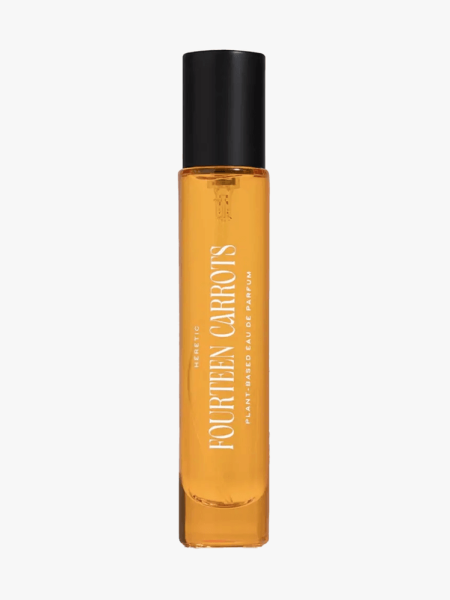
    • Best Carrot: Heretic Parfum Fourteen Carrots Eau de Parfum, $65
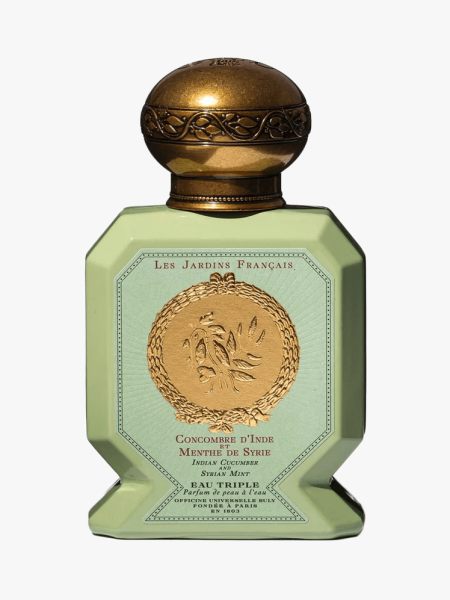
    • Best Cucumber: Officine Universelle Buly Eau Triple Indian Cucumber and Syrian Mint, $195
    • Best Rhubarb: Prada Infusion d’Rhubarbe Eau de Parfum, $190
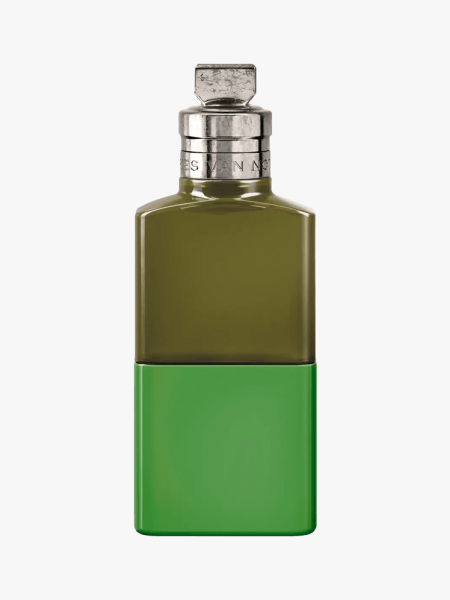
    • Best Herbaceous: Dries Van Noten Crazy Basil Eau de Parfum, $330
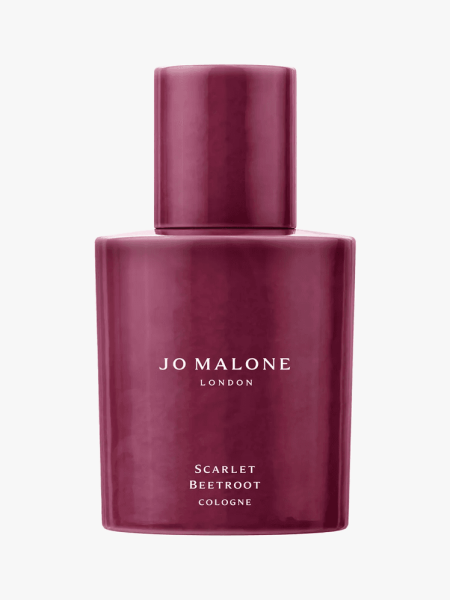
    • Best Beet: Jo Malone Scarlet Beetroot Eau de Parfum, $92
    • Best Green Pepper: D.S. & Durga Bistro Waters Eau de Parfum, $210

    Frequently Asked QuestionsAccordionItemContainerButtonLargeChevron

    • How we test and review products
    • Our staff and testers

    Best Tomato: Maison Margiela From the Garden Eau de Parfum

    Maison Margiela Fragrances Replica From the Garden Eau de Toilette bottle component with silver accents on a light gray background with red Allure Best of Beauty seal in the top right cornerSave to wishlistSave to wishlist

    Maison Margiela

    From the Garden Eau de Parfum

    $170

    Sephora

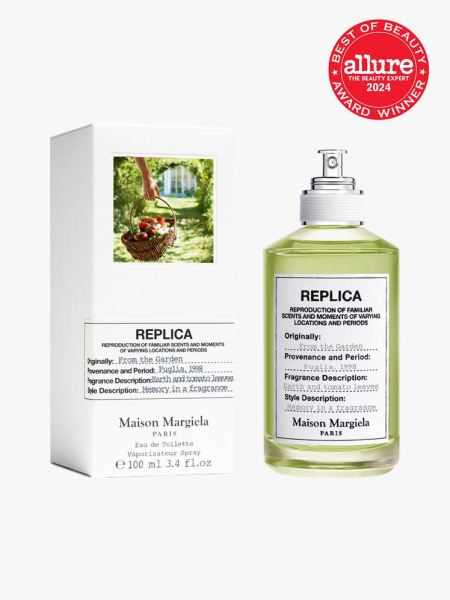
    Why it's worth it: Maison Margiela’s wildly popular fragrances are all inspired by singular experiences: a night at the jazz club, a walk on the beach, a funfair evening in summertime. This tomato-based scent captures the feeling of tending to the garden and harvesting the fruits of your labor on a sunny summer day, with tomato playing the starring role and imparting a unique green quality that makes the fragrance feel juicy and ripe but still light and fresh. Citrusy notes, including green mandarin and grapefruit, provide lift and represent the bright rays of sunshine, while geranium and patchouli add earthy spiciness. Imagine how good From the Garden would feel on a gloomy January day; it’s almost as good as biting into the first ripe tomato of the season. (Almost.)

    More to know

    AccordionItemContainerButtonLargeChevron

    • Key notes: tomato leaf, green mandarin, grapefruit, geranium, patchouli
    • Sizes: 1 oz, 3.4 oz

    Best Carrot: Heretic Parfum Fourteen Carrots

    Heretic Parfum Fourteen Carrots in branded component on a light gray backgroundSave to wishlistSave to wishlist

    Heretic

    Parfum Fourteen Carrots

    $65

    Nordstrom

    Why it's worth it: Carrot is a unique note in perfumery because the veggie itself doesn’t have a ton of its own fragrance; it’s a teeny bit sweet and a teeny bit earthy, but not as strong as tomatoes or herbs. But the act of harvesting carrots—digging into the soil, pulling up the root, brushing off the dirt, and biting into the orange vegetable—is a deliciously sensorial experience, which Heretic’s Fourteen Carrots captures in this dusky golden scent. Both carrot seed and carrot absolute are present in the formulation, surrounded by velvety notes of plum, clove, and vetiver. This is not a cheerful cartoon carrot scent; this is a sexy carrot scent.

    More to know

    AccordionItemContainerButtonLargeChevron

    • Key notes: carrot seed, carrot absolute, clove, plum, vetiver, eucalyptus
    • Sizes: 0.5 oz

    Best Cucumber: Officine Universelle Buly Eau Triple Indian Cucumber and Syrian Mint Eau de Parfum

    Officine Universelle Buly Eau Triple Indian Cucumber and Syrian Mint Eau de Parfum in branded component on a light gray backgroundSave to wishlistSave to wishlist

    Officine Universelle Buly

    Eau Triple Indian Cucumber and Syrian Mint Eau de Parfum

    $195

    Officine Universelle Buly

    Why it's worth it: Cucumbers, whether you eat them straight, chop them into a salad, or pickle them, simply smell and taste cool. The green veggie adds a round, watery flavor to your culinary creations, and it does the same in perfumery. It plays particularly well with mint, as you’ll notice at first sniff of this cool, crisp, breezy fragrance in a minty-fresh bottle. It’s absolutely the scent you’ll reach for when you’re craving a cooldown or a quick refresh, as the mint and cucumber combo is invigorating and cleansing, enhanced by light musk for a bit of creamy warmth.

    More to know

    AccordionItemContainerButtonLargeChevron

    • Key notes: cucumber, mint, musk
    • Sizes: 2.5 oz

    Best Beet: Jo Malone Scarlet Beetroot Eau de Parfum

    Jo Malone Scarlet Beetroot Eau de Parfum in branded component on a light gray backgroundSave to wishlistSave to wishlist

    Jo Malone

    Scarlet Beetroot Eau de Parfum

    $92

    Nordstrom

    Why it's worth it: Many years ago, I had a beet Cosmopolitan cocktail at a now-closed restaurant and I’ve never stopped thinking about it. Beet red (though it’s really magenta) is one of my favorite colors and I live for a fresh beet salad, so Jo Malone’s Scarlet Beetroot is an absolute essential in my rotation. Even the bottle is beet colored. Grounding, rich beetroot pairs with juicy blackcurrant top notes and a base of earthy, spicy patchouli for a scent that reminds me of sipping that long-lost beet Cosmopolitan in a dimly lit restaurant on a cool fall night.

    More to know

    AccordionItemContainerButtonLargeChevron

    • Key notes: beetroot, blackcurrant, patchouli
    • Sizes: 1 oz

    Best Herbaceous: Dries Van Noten Crazy Basil Eau de Parfum

    Dries Van Noten Crazy Basil Eau de Parfum in branded component on a light gray backgroundSave to wishlistSave to wishlist

    Dries Van Noten

    Crazy Basil Eau de Parfum

    $330

    Nordstrom

    Why it's worth it: There’s nothing more intoxicatingly aromatic than the smell of fresh basil, whether you’re picking it from the herb garden, chopping it up for dinner, or eating it on a caprese salad. Dries Van Noten harnessed that zesty, sparkling fragrance in their Crazy Basil scent, which—as you might expect—smells a whole lot like basil. It practically bursts out of the bottle with bold basil notes elevated by green, citrusy bergamot and mandarin, and as it fades, it relaxes (somewhat) into mid- and base notes of geranium, rosemary, and cedarwood. Plus, the sleek, minimalist two-tone green bottle is beyond sophisticated.

    More to know

    AccordionItemContainerButtonLargeChevron

    • Key notes: basil absolute, bergamot, mandarin, geranium, rosemary, cedarwood
    • Sizes: 3.4 oz

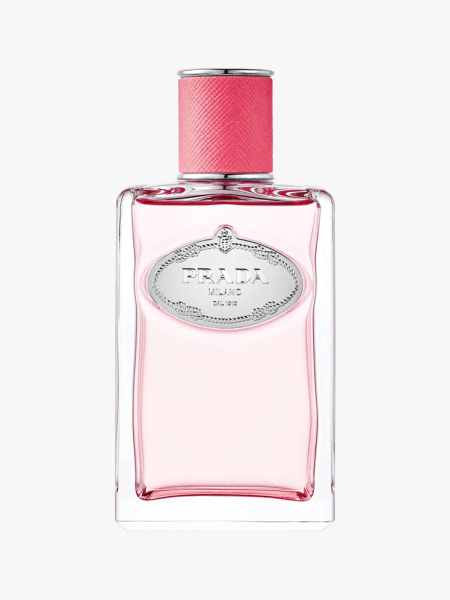
    Best Rhubarb: Prada Infusion de Rhubarbe Eau de Parfum

    Prada Infusion de Rhubarbe Eau de Parfum in branded component on a light gray backgroundSave to wishlistSave to wishlist

    Prada

    Infusion de Rhubarbe Eau de Parfum

    $190

    Nordstrom

    $190

    Ulta Beauty

    $190

    Sephora

    Why it's worth it: I have a rhubarb patch in my backyard and love nothing more than plucking a batch of the tart, tangy red stalks, stripping them of their giant leaves, and chopping them up into bits for a rhubarb crisp or slush. The entire experience is an aromatic journey: the soft soil from which it grows, the green of the leaves, the fruity snap of the produce, and the simple but delightful sweetness when you sprinkle it with sugar. Prada beautifully captured this feeling with their Infusion de Rhubarb Eau de Parfum. The fruity, citrusy juice is pink, and the scent matches that mood perfectly. Wear Infusion de Rhubarbe when you want to feel like joy personified.

    More to know

    AccordionItemContainerButtonLargeChevron

    • Key notes: green mandarin, rhubarb, rose, white musk
    • Sizes: 0.34 oz, 3.4 oz

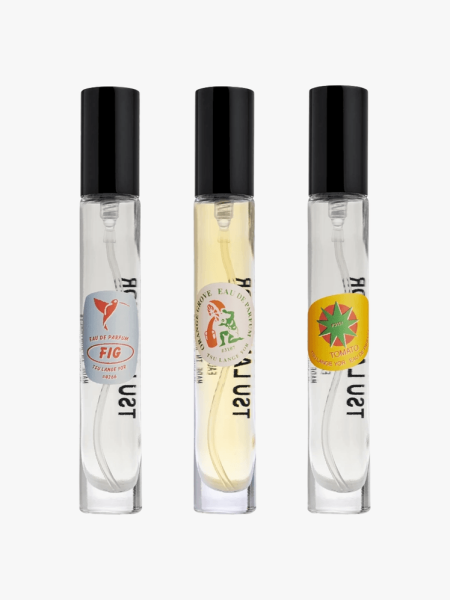
    Best for Layering: Tsu Lange Yor The Garden Eau de Parfum Set

    Tsu Lange Yor The Garden Eau de Parfum Set in multiple branded components on a light gray backgroundSave to wishlistSave to wishlist

    Tsu Lange Yor

    The Garden Eau de Parfum Set

    $147

    Nordstrom

    Why it's worth it: Be your own gardener with this set inspired by, well, the garden. (Sometimes the simplest names are the best.) It includes three easy-to-wear, easy-to-layer fragrances: Fig, Orange Grove, and Tomato, which can be worn solo as a singular scent or mixed and matched together for a creation all your own. The Garden Eau de Parfum Set gives you permission to play in the garden, so to speak; try Fig as the base with Tomato on top, or Orange Grove and Tomato mixed. Have fun with it!

    More to know

    AccordionItemContainerButtonLargeChevron

    • Key notes: citrus, rose, oakmoss
    • Sizes: set of 3 0.34 oz scentè

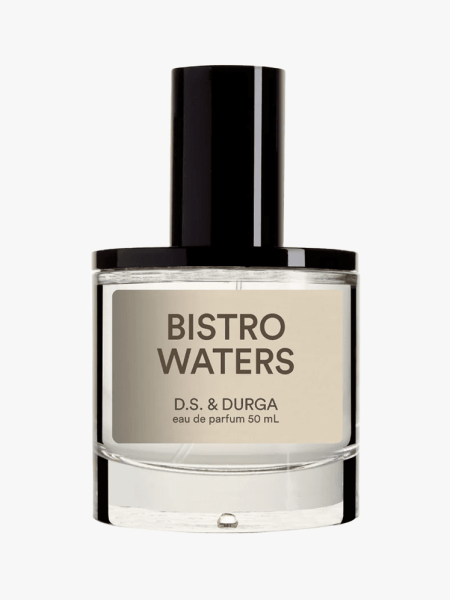
    Best Green Pepper: D.S. & Durga Bistro Waters

    D.S. & Durga Bistro Waters in branded component on a light gray backgroundSave to wishlistSave to wishlist

    D.S. & Durga

    Bistro Waters

    $210

    Neiman Marcus

    $210

    Saks Fifth Avenue

    Why it's worth it: When creating this fragrance, the folks at D.S. & Durga were inspired by restaurant culture of the ’90s, namely “when vegetables got fancy” and bistros were all the rage. True to its adorable name, this watery, herbal vegetal perfume does smell a lot like a corner bistro circa 1997—you know, the ones everyone is nostalgic for on TikTok? Bistro Waters opens with coriander, pear, and a twist of lime flower, and at the heart is a green bell pepper note for that “fancy vegetable” element. Basil, which floats atop a mossy base, adds even more herbal energy to the recipe, enhanced by a sprinkle of nutmeg. Gift it to your friend who dreams of being a chef, not a corporate girlie.

    More to know

    AccordionItemContainerButtonLargeChevron

    • Key notes: lime flower, pear, bell pepper, pea flower, basil
    • Sizes: 1.6 oz, 3.3 oz

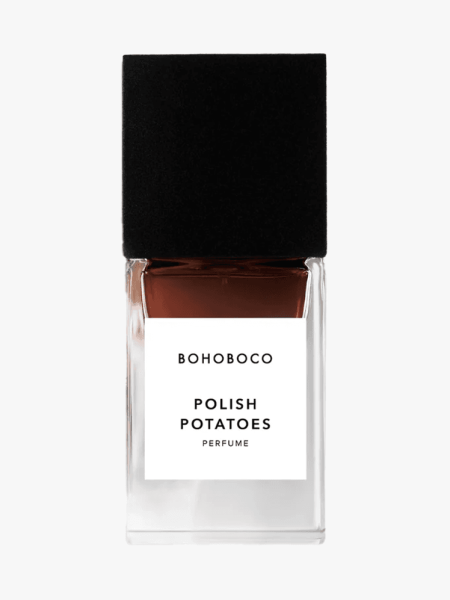
    Best Potato: Bohoboco Polish Potatoes

    Bohoboco Polish Potatoes in branded component on a light gray backgroundSave to wishlistSave to wishlist

    Bohoboco

    Polish Potatoes

    $210

    Bohoboco

    Why it's worth it: We know what you’re thinking: a potato perfume? Sounds weird, right? Well, Bohoboco’s Polish Potatoes is a little weird, but that’s part of its charm. It was inspired by the perfumer’s childhood memories of Polish markets and is an ode to the creamy, earthy, mild potato note. The scent opens with wheat and beetroot notes, and patchouli, soil and earth notes, and honey add to the hyper-realistic but still fantastical interpretation of a morning at the market.

    More to know

    AccordionItemContainerButtonLargeChevron

    • Key notes: wheat, beetroot, pine, Polish potatoes, rose, patchouli, soil, honey
    • Sizes: 1.7 oz

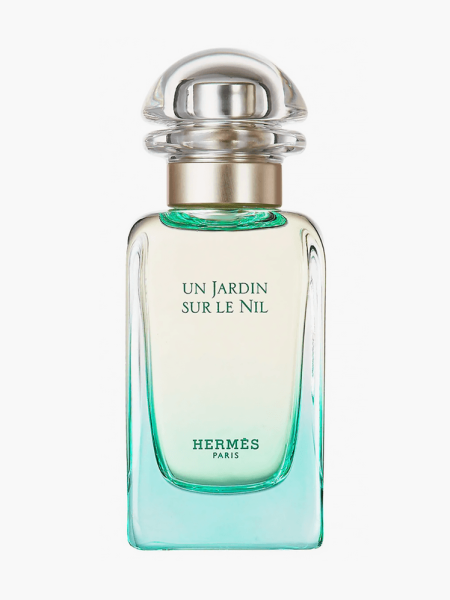
    Best Citrusy Vegetal: Hermès Un Jardin Sur le Nil Eau de Cologne

    Un Jardin Sur Le Nil in branded gradient bottle with silver and clear cap on light gray backgroundSave to wishlistSave to wishlist

    Hermés

    Un Jardin Sur Le Nil

    $124

    Nordstrom

    $124

    Sephora

    Why it's worth it: There’s an entire book written about the creation of this beloved fresh, citrusy fragrance, The Perfect Scent by Chandler Burr, and I highly recommend you read it. But even if you haven’t, you’ll find so much to love about Un Jardin Sur le Nil, created by legendary perfumer Jean-Claude Ellena as an ode to Egypt. Though grapefruit, mango, and lotusnotes are definitely the standout stars here, there’s a lovely tomato leaf note added for depth and dimension, making this the perfect pick (pun intended) for someone who likes the idea of vegetal scents but isn’t quite ready to smell like a full-on tomato.

    More to know

    AccordionItemContainerButtonLargeChevron

    • Key notes: grapefruit, mango, tomato leaf, lotus, sycamore
    • Sizes: 1.6 oz, 3.3 oz

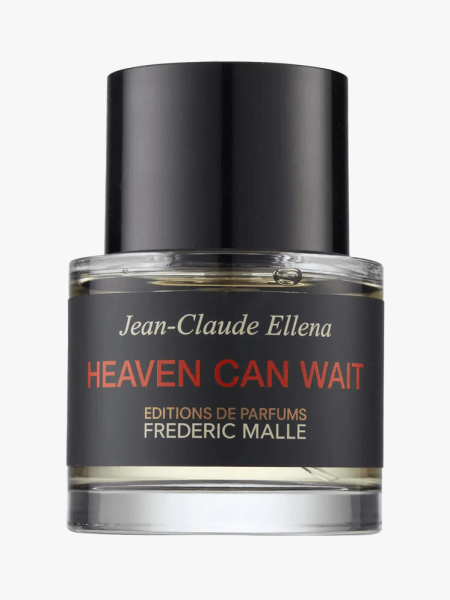
    Best Skin Scent Vegetal Perfume: Frederic Malle Heaven Can Wait Eau de Parfum

    Frederic Malle Heaven Can Wait Eau de Parfum in branded component on a light gray backgroundSave to wishlistSave to wishlist

    Frédéric Malle

    Heaven Can Wait Eau de Parfum

    $410

    Nordstrom

    Why it's worth it: If your idea of heaven is a day in the garden, meet your new favorite fragrance. Beloved luxury perfume house Frederic Malle’s take on vegetal perfume centers on carrot, which lends a lovely light, golden sweetness to a sensual blend of iris, clove, plum, and musk. Heaven Can Wait doesn’t smell like the garden; instead, it smells like your lover’s skin on your sheets: musky and spicy, with a lingering warmth you can wrap yourself up in.

    More to know

    AccordionItemContainerButtonLargeChevron

    • Key notes: clove, iris, vetiver, vanilla, musk, carrot
    • Sizes: 1.7 oz

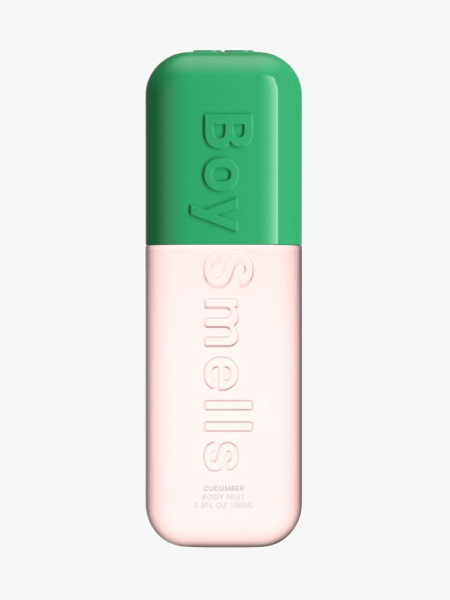
    Best Vegetal Body Mist: Boy Smells Cuc Body Mist

    Boy Smells Cuc Body Mist in branded component on a light gray backgroundSave to wishlistSave to wishlist

    Boy Smells

    Cuc Body Mist

    $24 $23 (4% off)

    Amazon

    $24

    Nordstrom

    $24

    Sephora

    Why it's worth it: Picture this: it’s a sweltering hot day. You just left the crowded, humid subway and emerged onto the equally steamy street. You pull this adorable body mist from your bag, spritz it on, and say “Ahh…” just like you’re in a spa commercial. Cucumber can do that to a (sweaty) person! The scent is basically spa water in sprayable body mist form, with notes of cucumber (duh), mint, and musk that float across your skin.

    More to know

    AccordionItemContainerButtonLargeChevron

    • Key notes: cucumber, mint, musk
    • Sizes: 3 oz, 8 oz

    Frequently Asked Questions

    How we test and review products

    When Allure tests a product, our editors look at it from every angle in an effort to best serve you. We review ingredients, scrutinize brand claims, and, when necessary, examine peer-reviewed scientific and medical studies. In addition to testing each and every product that's included in each and every review, we rely on experts who shape their fields, including dermatology, cosmetic chemistry, and medicine, to help us vet the ingredients and formulas.

    For our list of the best citrus perfumes, we considered each product's performance across five primary categories: product ingredients and efficacy, packaging, fragrance, texture, and product wear. Every product was determined to have excelled in each category by our editorial team, which is composed of in-house writers and editors as well as contributors—along with special consideration from fragrance experts. To learn more information on our reporting and testing processes, read our complete reviews process and methodology page.

    Our staff and testers

    A beauty product is a personal purchase. You might be searching for a face cream to address persistent dryness or a new nail product to add to your Sunday self-care routine; you may simply be browsing around for the latest launches to hit the hair market. No matter what you seek or your individual needs and concerns, Allure wants to ensure that you love anything we recommend in our stories. We believe that having a diverse team of writers and editors—in addition to the wide range of outside testers and industry experts we regularly call upon—is essential to reaching that goal.

    After all, can we really say a skin-care product is the "best" for people over 50 if the only testers we've solicited opinions from folks who have yet to hit 30? Can we honestly deem a high-end diffuser worthy of your hard-earned cash if it's never been tested on curls? We're proud that our staff spans a wide range of ages, skin tones, hair textures, genders, and backgrounds, which means that we are able to fairly assess any beauty product that comes into the beauty closet.

  • Can You Use Azelaic Acid With Tretinoin? Dermatologists Weigh In.

    Can You Use Azelaic Acid With Tretinoin? Dermatologists Weigh In.

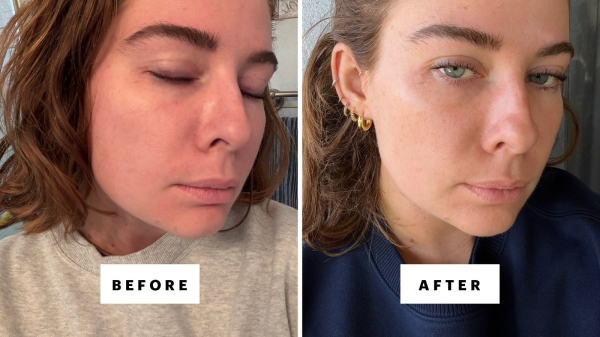
    A before and after image side by side of Allure editor Sarah Kinonen before using azelaic acid and tretinoin and after.Courtesy of subjectSave StorySave this storySave StorySave this story

    If there was an award for the hardest-working skin-care ingredient, tretinoin would undoubtedly be a frontrunner. A synthetic derivative of vitamin A, it’s long been considered the gold standard for treating everything from acne and hyperpigmentation to fine lines. But even this dermatologist-favorite ingredient can benefit from having a good sidekick. Lately, TikTokers and skin-care enthusiasts are making the case for using tretinoin with azelaic acid, a multitasking ingredient that can help address discoloration, redness—and even offset some of the irritation tretinoin can cause.

    Beverly Hills-based dermatologist Jessica Wu, MD, likens the tretinoin and azelaic acid pairing to a balanced workout routine. "It's like doing cardio plus strength training," she tells Allure, noting that many of her patients can't tolerate tretinoin alone. “They both help with acne, anti-aging, and pigmentation, so the combination is really appropriate for a wide range of patients. But,” she adds, “it has to be sequenced properly so you don't cause more irritation.”

    To help you reap the benefits—without overdoing it—we asked dermatologists and cosmetic chemists to explain exactly how to use tretinoin and azelaic acid together.

    In this storyAccordionItemContainerButtonLargeChevron

    • What is tretinoin?
    • What is azelaic acid?
    • What are the benefits of using tretinoin and azelaic acid together?
    • Why do dermatologists feel confident prescribing tretinoin and azelaic at the same time?
    • Are there any risks with using tretinoin and azelaic acid together?
    • How should you incorporate tretinoin and azelaic acid into your skin-care routine?
    • Are there specific concentrations/products that tend to be most effective?
    • What results can you expect when using tretinoin and azelaic acid together, and when will you start seeing them?

    What is tretinoin?

    Available by prescription only, tretinoin is a vitamin A derivative and is the only retinoid approved for treating signs of aging, whereas retinol is its over-the-counter alternative. “Tretinoin is considered the gold standard topical treatment for acne and one of the most well-studied ingredients for improving signs of photoaging, including fine lines, uneven pigmentation, and skin texture,” says Connie Yang, MD, FAAD, a board-certified dermatologist in New York City. The ingredient works by binding to retinoic acid in the skin, thus boosting cell turnover, stimulating collagen production, and improving things like acne, fine lines, and uneven texture.

    Tretinoin isn't just for mature skin; it's prescribed to patients of all ages for different reasons. Because it decreases oil production in the sebaceous glands, it's long been a go-to acne treatment and is often recommended for teenagers, according to Julie Russak, MD, a board-certified dermatologist and the founder of Russak Dermatology Clinic in New York City. Later in life, tretinoin is equally sought after for its ability to improve the appearance of wrinkles, fine lines, and discoloration by stimulating skin-cell turnover. Says Dr. Russak, “It helps our cells replenish the surface of the skin with newer, healthier cells.”

    According to Dr. Yang, a common misconception is that any irritation caused by tretinoin is because the formula is too strong. “The irritation isn't because tretinoin is damaging the skin, it's because it's asking your skin to work faster than it's used to,” she explains. “Tretinoin increases the rate at which your skin cells turn over and, while that's what makes it so effective for treating acne and improving signs of aging, it can also temporarily disrupt the skin barrier.” But as the skin adapts over several weeks, Dr. Yang adds, irritation typically improves while the benefits continue to build.

    What is azelaic acid?

    Azelaic acid is a naturally occurring dicarboxylic acid that's available in both prescription and over-the-counter strengths, Dr. Yang says. (Over-the-counter azelaic acid strengths are typically 10% or lower, while prescription formulas are available in 15% and 20% strengths.) “It's a multitasking ingredient that helps treat acne, reduce inflammation, fade post-inflammatory hyperpigmentation, and improve redness, all while targeting acne-causing bacteria,” she notes.

    Azelaic acid helps reduce inflammation by targeting several inflammatory pathways in the skin, while helping fade pigmentation by inhibiting the pigment-forming enzyme tyrosinase. “Inflammation in acne isn't one single event—it's a chain of signals, one step triggering the next,” says Dr. Russak. Essentially, azelaic acid interrupts that chain at multiple points. “It neutralizes unstable oxygen molecules that help set inflammation off in the first place,” she explains. “It reduces the signaling proteins that cells use to pass the inflammatory message to each other.” Meanwhile, azelaic acid reduces the activity of NF-kB, the main cellular trigger for inflammation and redness.

    For those prone to blemishes, the ingredient targets cutibacterium acnes (formerly known as propionibacterium acnes), a bacterium associated with acne. “It also interferes with how cells inside the pore stick together—which is the actual mechanism behind a clog forming—so it works not only on inflamed, angry breakouts but also on blackheads and whiteheads,” says Dr. Russak. Additionally, azelaic acid reduces keratin buildup in the skin’s outermost layer, helping dead skin cells shed more easily.

    Dr. Russak points out that azelaic acid's anti-inflammatory properties also make it a go-to for treating rosacea: “For rosacea-prone skin it inhibits kallikrein-5 and the cathelicidin gene, which lowers LL-37, a peptide involved in both inflammation and the vascular reactivity behind visible redness.” By targeting this pathway, azelaic acid can lessen the flushing and redness associated with rosacea.

    What sets azelaic acid apart from other ingredients is its versatility. Says Dr. Yang, “The reason I love azelaic acid is that it addresses multiple common skin concerns at once: acne, discoloration, and redness, all while causing much less irritation than most other active ingredients.”

    Another major advantage is its gentle nature. Unlike many acne-fighting ingredients, azelaic acid is generally well-tolerated, making it a great option for people with sensitive skin. It also stands out as one of the few topical skin-care ingredients widely considered suitable to use during pregnancy, according to Dr. Wu. By contrast, dermatologists advise against using tretinoin during pregnancy because of the potential risk of birth defects.

    What are the benefits of using tretinoin and azelaic acid together?

    Though this combination has recently taken TikTok by storm, it's hardly a new skin-care duo. “While it's a new trend on social media, dermatologists have been prescribing these medications together for decades,” says Dr. Yang. The reason is simple: The two ingredients complement each other. For example, if you're treating acne, tretinoin speeds up skin-cell turnover but doesn't kill acne-causing bacteria—a gap that azelaic acid helps fill, Dr. Wu explains. Conversely, azelaic acid isn't known to stimulate collagen production, whereas tretinoin does.

    The coupling is equally beneficial for concerns like hyperpigmentation, melasma, and sun damage. “Tretinoin helps normalize and speed skin-cell turnover, so pigment-containing cells are shed more efficiently over time. It can also help other topical treatments work more effectively,” explains Mona Gohara, MD, a board-certified dermatologist based in Hamden, Connecticut. “Azelaic acid more directly targets abnormal pigment production by inhibiting tyrosinase, an enzyme involved in making melanin. It also has anti-inflammatory properties, which is particularly helpful when inflammation is contributing to discoloration." An easy way to think about it is this, says Dr. Gohara: "Azelaic acid helps turn down the faucet of excess pigment production, while tretinoin helps move the pigment that is already there up and out more efficiently.” Because the ingredients address discoloration at different points in the process, they work exceptionally well together.

    Meanwhile, Dr. Russak notes, the benefits extend beyond treating acne and pigmentation. Because azelaic acid has anti-inflammatory properties, it can help minimize some of the irritation associated with tretinoin.

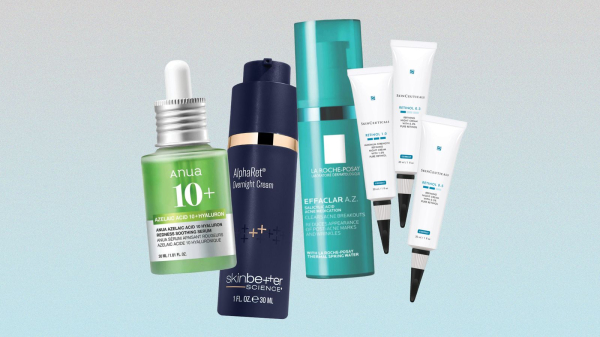
    If you want overthecounter options dermatologists recommend azaleic acid from Anua and La Roche Posay and retinol from...

    If you want over-the-counter options, dermatologists recommend azaleic acid from Anua and La Roche Posay, and retinol from Skinbetter and Skinceuticals.

    Photos: Courtesy of brands and subjects; Illustrations by AllureWhy do dermatologists feel confident prescribing tretinoin and azelaic at the same time?

    Individually, both tretinoin and azelaic acid have been studied extensively, whereas the combination has not—at least not to nearly the same extent, according to Dr. Russak. Nevertheless, while direct clinical trial evidence on the combination is limited, she says years of research on the individual ingredients, along with clinical experience and guideline support, make it a common and reasonable treatment at the disposal of dermatologists: “Both are individually endorsed in the 2024 American Academy of Dermatology guidelines; and the Delphi consensus among board-certified dermatologists goes further, recommending a topical retinoid as first-line therapy with azelaic acid added as an adjunct for patients dealing with acne-associated hyperpigmentation.” (The Delphi consensus is a structured method where a panel of skin experts answers anonymous questionnaires in multiple rounds.)

    In addition to the reasons mentioned above, tretinoin and azelaic acid don’t chemically react with each other, says Krupa Koestline, a cosmetic chemist and biotech innovator. “They don't share a reactive functional group [meaning the part of a molecule that can chemically react with another ingredient] that would cause degradation or an adverse reaction between them, the way, say, benzoyl peroxide oxidizes tretinoin.” In other words, the ingredients remain stable when used together; they don't chemically break each other down or reduce the other's effectiveness.

    Dr. Russak is comfortable prescribing the two ingredients together, in part because they tend to have different side effects. “Their side-effect profiles don't overlap in the same way,” she explains. With tretinoin, irritation shows up as scaling and redness, while azelaic acid manifests as a brief tingling or burning sensation right after application that’s usually gone within a few minutes.

    Are there any risks with using tretinoin and azelaic acid together?

    You generally don't want to pair tretinoin with other exfoliating acids like glycolic acid, mandelic acid (which are alpha hydroxy acids, or AHAs) or salicylic acid (which is a beta-hydroxy acid, or BHA), according to cosmetic chemist Ginger King. Azelaic acid is the exception, as King doesn't consider it an exfoliating acid.

    The issue is that when you use tretinoin alongside other exfoliating acids, you end up stacking acids that can all disrupt the skin barrier, says Dr. Russak, who adds that it's worth distinguishing glycolic and lactic acid from salicylic acid as they don't behave the same way. AHAs, like glycolic and lactic acid, work on the surface, exfoliating the outer layers of the skin.

    Using AHAs and tretinoin at the same time "can increase dryness, peeling, redness, and irritation,” says Dr. Gohara. “While removing surface cells can theoretically influence penetration, from a practical standpoint the bigger consideration is tolerability. You want tretinoin to work effectively without unnecessarily irritating the skin.” If you want to use both, and your skin can tolerate them, dermatologists recommend using them on alternate nights.

    BHAs, like salicylic acid, are oil soluble and work “especially well inside oily pores, while tretinoin normalizes cell turnover and helps prevent pores from being clogged in the first place,” says Dr. Gohara. “They can complement each other, particularly for acne-prone skin, but using both at the same time may increase irritation without necessarily giving you better results.” Again, the advice is to use them on different days or different times of the day, like a salicylic acid-based cleanser in the morning and tretinoin at night.

    When it comes to azelaic acid and tretinoin, “too much of a good thing isn’t always a good thing,” says Dr. Russak. Those with sensitive skin should proceed with caution when using the two ingredients together, as the combination may be too much for their skin to tolerate. As always, it’s important to see how your skin responds to the combination before going all in. “Make sure the barrier isn’t compromised, because if it is, it will be too irritating for the skin,” she adds.

    Don’t be surprised if your skin needs time to acclimate to the combination. “When used together, especially at the start of treatment, some people may experience dryness, peeling, redness, stinging, or a temporary increase in skin sensitivity,” says Dr. Yang. Because tretinoin tends to be the more irritating of the two ingredients, these reactions may be particularly noticeable as your skin adjusts to the retinoid.

    How should you incorporate tretinoin and azelaic acid into your skin-care routine?

    If this is your first time using either ingredient, Dr. Wu recommends starting with azelaic acid before introducing tretinoin if you have sensitive skin, since it's generally much gentler. For some people, she says, it can take up to a month for the skin to adjust to azelaic acid. And while many can tolerate using it daily from the start, those with sensitive skin should begin every other day, then increase to daily use after a week if they don't experience irritation.

    Alternatively, if your goal is to address comedones or clogged pores, Dr. Wu recommends starting with tretinoin first. She suggests applying it on Monday and Friday nights, initially; if you aren't experiencing irritation, add a third night, such as Wednesday, before gradually working up to nightly use. “If on a stable routine of tretinoin with no irritation after two weeks,” she says, “you could add azelaic acid. If you can't go past three nights a week, you can alternate azelaic acid in between. If you're already using tretinoin nightly, then add azelaic acid during the day.”

    Once your skin has gotten used to both ingredients, Dr. Wu recommends using azelaic acid in the morning and tretinoin at night to help minimize irritation. That said, you can layer the two ingredients if your skin can tolerate it; although, because tretinoin can increase sun sensitivity, it should only be used in the evening and always apply SPF 30 or above in the morning. If you do apply both in the same nighttime routine, start with the thinner formula. “If you have azelaic acid gel, that should go on before tretinoin cream,” says Dr. Yang.

    Now what about the rest of your skin-care routine when using both tretinoin and azelaic acid? Dr. Yang suggests you keep things simple: “In the morning, use a gentle cleanser, apply azelaic acid, follow with a moisturizer if needed, and finish with a broad-spectrum sunscreen,” she says. “In the evening, cleanse, let your skin dry completely, apply a pea-sized amount of tretinoin to the entire face, and follow with a moisturizer.” For those prone to irritation, this separates the two ingredients while still providing benefits from both.

    Are there specific concentrations/products that tend to be most effective?

    When incorporating tretinoin and azelaic acid into your routine, consult with your dermatologist, who can recommend the ideal strengths for your skin. Koestline says 0.025% tretinoin is a realistic starting point when pairing it with azelaic acid. While higher strengths, such as 0.05% and 0.1%, may be more effective, they also increase the risk of irritation. “For azelaic acid, 10% is a reasonable over-the-counter starting concentration; 15 to 20% (prescription-strength, as in Finacea/Azelex) is where most of the anti-inflammatory and pigmentation data comes from,” she adds.

    While tretinoin is available by prescription only, Dr. Russak recommends encapsulated retinol formulas for those who are looking for an over-the-counter alternative. She points to Skinbetter Science’s formulas as a favorite. Dr. Russak also likes SkinCeuticals' range of retinol strengths, which allow beginners to start with a lower concentration and gradually work their way up.

    For over-the-counter azelaic acid, Dr. Yang suggests Anua’s Azelaic Acid 10 Hyaluron Redness Soothing Serum and, for acne specifically, La Roche Posay’s Effaclar A.Z. Acne Face Gel. The formula you choose matters too. According to Dr. Russak, cream-gel formulations are good for acne-prone skin as they absorb easily and minimize pore blockage; creams, on the other hand, are typically better suited for people with rosacea or sensitive skin, as they're generally more moisturizing. She also recommends avoiding formulas that contain alcohol, which can further irritate already sensitive skin. Serum textures tend to work well for those with normal to combination skin.

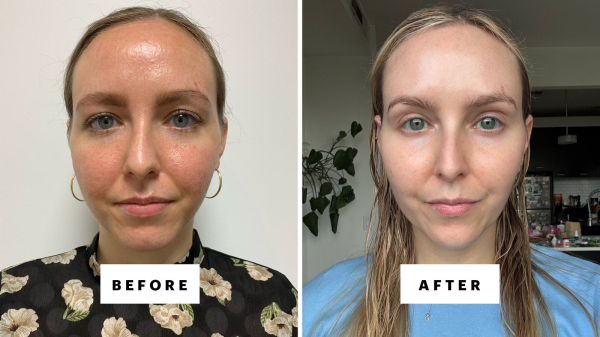
    Image may contain Accessories Earring Jewelry Head Person Face and Adult

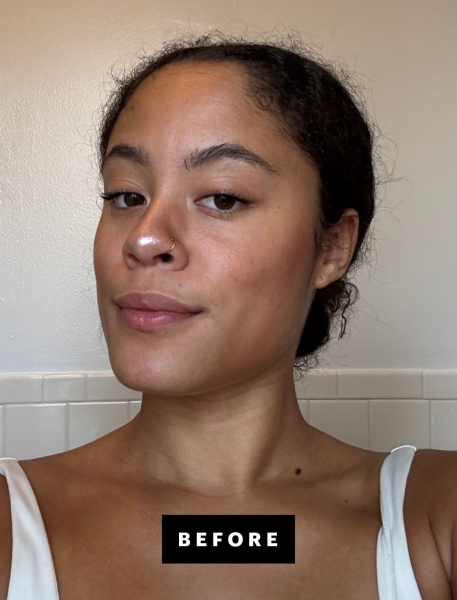
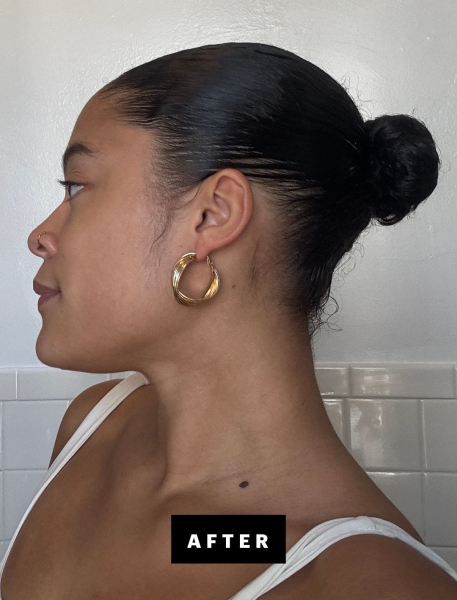
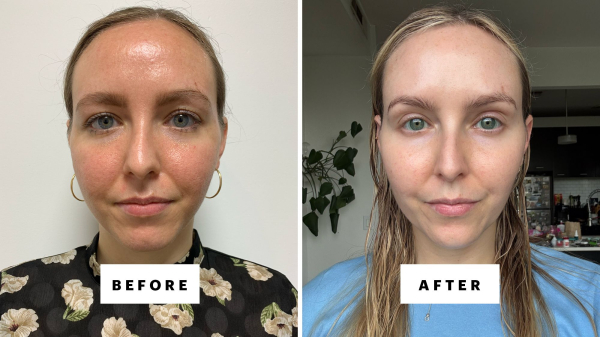
    The writer before using tretinoin and azelaic acid together, and two-to-three weeks after using the ingredient combo.

    What results can you expect when using tretinoin and azelaic acid together, and when will you start seeing them?

    Everyone’s skin is different, but according to Dr. Wu, most people see results within about two weeks of consistent use. “You should start to see some skin looking clearer because both of them are starting to slough off the top layers of dead skin; there should be less dullness by two weeks,” she says. By the one-month mark, you should start to see some improvement in clogged pores, blackheads, and acne. “By two months,” Dr. Wu continues, “you should start to see improvement in pigmentation.”

    Allure beauty director, Sarah Kinonen, has firsthand experience with the pairing. Four years ago, Kinonen’s dermatologist prescribed tretinoin and azelaic acid to her after an acne consultation. “I was dealing with a couple of hormonal breakouts that would pop up every month during my period, plus redness from my rosacea,” Kinonen recalls. “So it was during that appointment that she put me on an oral drug and a handful of topicals: Altreno (tretinoin), azelaic acid 15% (Finacea), Soolantra (for rosacea), and 100mg of Spironolactone (for hormonal breakouts).”

    Kinonen says further that her skin needed time to adjust to the new lineup of topical treatments. “I had instant dryness and flaking, but I soon learned to balance them out: azelaic acid (twice a day, every day) and tretinoin (every other night),” she explains. “On nights when I use the tretinoin and azelaic acid together, I first apply a dime-sized dollop of tretinoin, wait a beat for it to dry, then layer on a hydrating serum as a barrier before going in with my azelaic acid (also a dime-sized dollop). It's the sandwich technique, and it really does help prevent dryness or peeling days later.” She follows that with a moisturizer and an occlusive balm to lock in hydration.

    A before and after image side by side of Allure editor Sarah Kinonen before using azelaic acid and tretinoin and after.

    Allure beauty director, Sarah Kinonen, before starting on tretinoin and prescription azelaic acid, and TK TIME after.

    Courtesy of subject

    Kinonen notes, too, that the results didn’t happen overnight—it took her a few months to notice a significant difference in her skin. “I didn't have any breakouts—and I haven't had any since, if you can believe it. It's been four years!” she says, pointing out that her results weren’t solely from tretinoin and azelaic acid. “I do think my other medications (Spironolactone and Soolantra) are also a big reason I haven't had any irritations, but the tret and azelaic acid have become non-negotiable powerhouses in my routine.”

    After hearing TikTokers wax poetic about the combo, I decided to try it myself. Following my dermatologist’s recommendation (and because I'd never experienced irritation while using tretinoin in the past), I opted for 0.025% tretinoin (the same strength I used a few years ago) at night, along with 15% azelaic acid in the morning. Right away, I was pleasantly surprised by my skin’s reaction: no dryness or discomfort. Although it’s been only two weeks since I added the duo to my routine, I’ve already noticed less redness, dullness, and hyperpigmentation, as well as smoother skin texture. Time will tell how my skin continues to respond to this regimen, but so far, it’s easy to see why TikTokers and dermatologists swear by the combo.

  • 11 Best Olive Young x Sephora K-Beauty Products

    11 Best Olive Young x Sephora K-Beauty Products

    A collage of photos of women holding beauty products surrounded by other beauty productsCollage: Jemeria Davison; Source images: Courtesy of brands and Allure editorsSave StorySave this storySave StorySave this story

    If you’ve ever stepped inside an Olive Young in Seoul (especially a flagship store), you know the particular thrill of wandering aisle after aisle of buzzy Korean skin care, makeup, and hair care—and wondering how much you can reasonably fit in your suitcase. Starting today, you can save that precious luggage space. Sephora and Olive Young are officially coming together to bring 19 Olive Young-curated K-beauty brands to Sephora.com (and in stores).

    And this isn’t simply Sephora stocking more K-beauty. Olive Young, Korea’s largest health and beauty retailer, selected the lineup based on product performance, popularity, and trend leadership back home, essentially giving American shoppers a shortcut to what Korean beauty lovers are actually buying. The assortment spans familiar names like Banila Co, Ma:nyo, and Abib alongside brands that have largely flown under the radar stateside, including Fully, Menokin, and Bioheal BOH. Translation: Your next K-beauty haul comes with significantly less jet lag.

    Our Top Olive Young x Sephora Products

    • Bean There, Smoothed That: BePlain Mung Bean Pore Tight-Up Serum, $34
    • Stick Around: Abib Quick Sunstick Protection Bar SPF50+, $28
    • Just Popping In: Menokin 30 Seconds Quick Bubble Mask, $32
    • Soy Long, Makeup: Ma:nyo Pure Soybean Cleansing Milk, $21
    • Root Awakening: Dr.ForHair Folligen Thickening Shampoo, $24
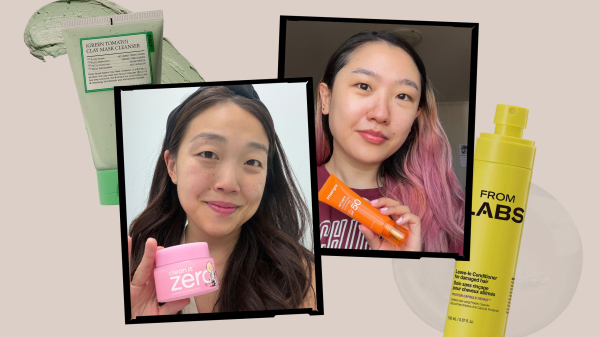
    • Green Means Glow: Fully Green Tomato Clay Mask Cleanser, $20
    • Damage Control: FromLabs Protein Capsule Hair Repair Leave In Conditioner, $20

    Frequently Asked QuestionsAccordionItemContainerButtonLargeChevron

    • Can I trust buying Korean skin-care products online?
    • Meet the experts
    • How we test and review products
    • Our staff and testers

    Bean There, Smoothed That: BePlain Mung Bean Pore Tight-Up Serum
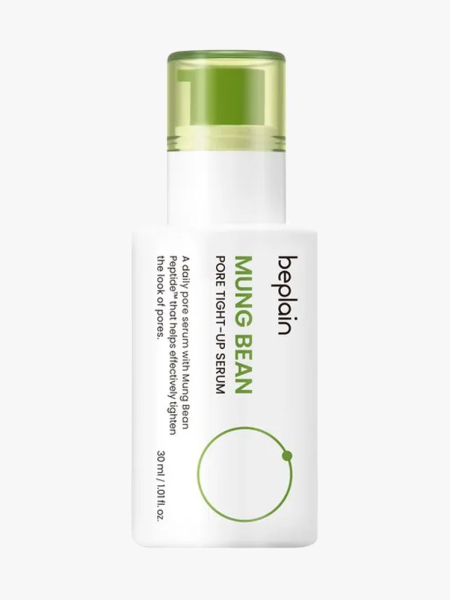
    Beplain Mung Bean Pore Tight-Up Serum in branded component on a light gray backgroundSave to wishlistSave to wishlist

    BePlain

    Mung Bean Pore Tight-Up Serum

    $34

    Sephora

    Allure commerce editor Sarah Han applying the BePlain Mung Bean Pore Tight-Up Serum

    Sarah Han

    Why we love it: Until now, Beplain has largely flown under the radar in the US, but with its arrival at Sephora, that’s about to change. Back in South Korea, the skin-care brand has already made a name for itself with its soothing mung bean formulas, which have racked up awards from major K-beauty platforms like Hwahae and, of course, Olive Young. Here, mung bean seed extracts are paired with niacinamide, which can regulate excess oil and improve the look of pores, plus glycerin and hyaluronic acid to draw moisture into the skin. Adenosine and peptides round out the formula with smoothing benefits. What starts as a lightweight gel melts into a watery essence on contact, sinking in almost instantly and leaving skin noticeably softer and glassier.

    Tester feedback from commerce editor Sarah Han

    AccordionItemContainerButtonLargeChevron

    “As a heavily awarded brand (by both retailers like Olive Young and K-beauty review sites such as Hwahae), Beplain has been on my radar for a while. So, while in Seoul, I picked up three of its mung bean products: cleansing oil, cleansing foam, and serum. All were really great, but spoiler alert: The serum was the standout. I love a lightweight gel serum, and this one is especially cooling and refreshing, and it absorbs like *snaps fingers.* As someone who's increasingly concerned about pore care—especially around the center of my face—I love how seamlessly the Mung Bean Pore Tight-Up Serum fits into my daily routine, no matter day or night. It does tighten up the look of my pores when I use it multiple days in a row." —Sarah Han, commerce editor

    More to know

    AccordionItemContainerButtonLargeChevron

    • Key ingredients: mung bean, peptides, hyaluronic acid, adenosine, niacinamide, glycerin
    • Who it’s for: those with acne and large pores
    • Fragrance-free: yes

    Clean Getaway: Banila Co Clean It Zero Best of Cleansing Balms Trio
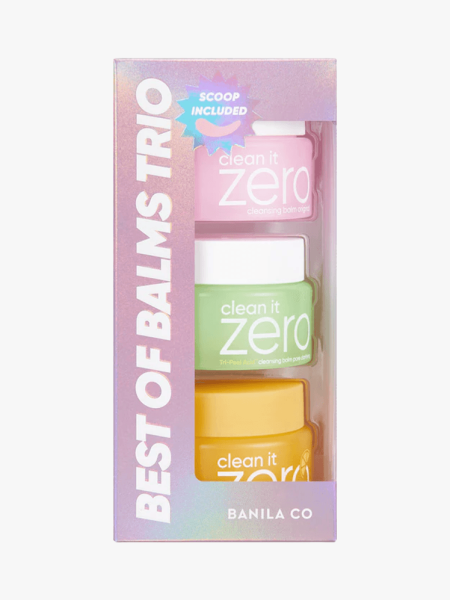
    Banila Co Clean It Zero Best of Cleansing Balms Trio in branded component on a light gray backgroundSave to wishlistSave to wishlist

    Banila Co.

    Clean It Zero Best of Cleansing Balms Trio

    $32

    Sephora

    Allure contributing commerce writer Christa Joanna Lee applying the Banila Co Clean It Zero Best of Cleansing Balms Trio

    Christa Joanna Lee

    Why we love it: Dermatologists, K-beauty experts like Charlotte Cho, and Allure editors have long been keeping Banila Co’s Clean It Zero Cleansing Balm in rotation—and the iconic cleanser now comes in a trio of formulas that let you tailor your first cleanse to your skin’s needs. There’s the Original Balm, the classic, jojoba oil-based makeup melter; Pore Clarifying Balm, which adds salicylic acid, LHA, and gluconolactone for a little extra exfoliating power; and Brightening Balm, made with the vitamin C derivative ascorbyl glucoside to help boost radiance while you cleanse.

    Whichever one you reach for, the appeal starts with that signature texture: a silky solid that practically liquefies on contact, helping dissolve makeup, sunscreen, and excess oil without requiring a ton of rubbing or tugging. “I use this for my evening cleanse when I want to remove all the dirt, makeup, and oil that accumulated throughout the day,” Claire Chang, MD, a board-certified dermatologist at UnionDerm based in New York City, previously told Allure of the Original formula. She also praised its soft, milky texture and the way it leaves her skin feeling smoother and more hydrated. And there’s no need to go overboard: “Just a little scoop goes a long way!” says Cho.

    Tester feedback from contributing commerce writer Christa Joanna Lee

    AccordionItemContainerButtonLargeChevron

    “Some cleansing balms, you just know from the second they hit your skin that they’re going to be a good fit, and Banila Co’s Clean It Zero (the original pink one!) is one of them for me. The solid balm gets sooo melty almost immediately, transforming into such a silky oil that it’s hard to believe it started solid in the first place. I’m already on my third tub even with a shelf of cleansing balms to choose from, which says plenty. I get very irked if my face cleansers leave my skin too squeaky after cleansing but this does no such thing. And, importantly, it passes my white-towel test with flying colors—there’s hardly any makeup residue left behind, save for the little bit my second cleanse takes care of.” —Christa Joanna Lee, contributing commerce writer

    More to know

    AccordionItemContainerButtonLargeChevron

    • Key ingredients: olive oil, jojoba seed oil, acerola fruit extract, pomegranate fruit extract, vitamin C
    • Who it’s for: everyone, especially those with dry or sensitive skin
    • Fragrance-free: yes

    Just Popping In: Menokin 30 Seconds Quick Bubble Mask
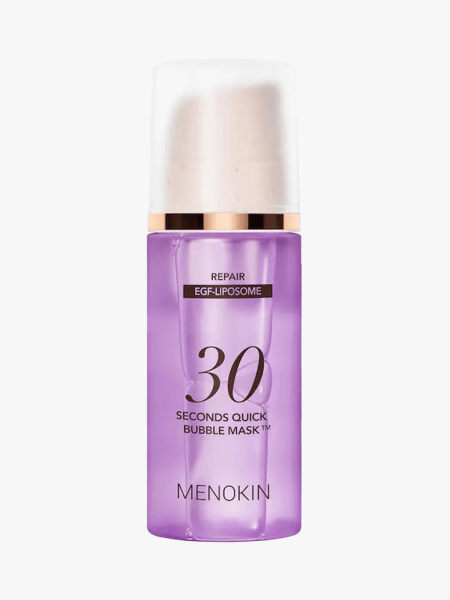
    Menokin 30 Seconds Quick Bubble Mask in branded component on a light gray backgroundSave to wishlistSave to wishlist

    Menokin

    30 Seconds Quick Bubble Mask

    $32

    Sephora

    Han applying the Menokin 30 Seconds Quick Bubble Mask

    Sarah Han

    Why we love it: Love a sheet mask but don’t always have time for one? The lightweight formula foams up in about 30 seconds, creating a layer of tiny bubbles that gradually collapse and sink into skin—no slippery fabric or rinse required. Once the bubbles disappear, they leave behind skin-nourishing benefits: Niacinamide brightens uneven tone and boosts radiance, while hyaluronic acid draws in moisture for a plumper, smoother look. The formula also contains Myrothamnus flabellifolia callus culture extract, an antioxidant-rich plant extract that supports skin recovery, plus adenosine to soften the appearance of fine lines. And tucked toward the end of the ingredient list is sh-Oligopeptide-1, a lab-made form of epidermal growth factor (EGF) used in skin care to support a firmer, smoother, and more rejuvenated appearance. Come for the extremely satisfying bubbles; stay for the skin-care ingredients doing the actual heavy lifting.

    Tester feedback from Han

    AccordionItemContainerButtonLargeChevron

    “The moment I saw this bubble mask in an Olive Young store, I knew I had to get it. I love a sensorial skin-care product, and K-beauty always nails that category. Not only does it melt into your skin in 30 seconds, but you don't even need to wash it off—how simple for someone who's already running late…and taking work-related content at the very last minute. (Guilty.) The instant satisfaction of my glowing, hydrated skin is unmatched. I love sheet masks, but they often slip and slide across your face, feel heavy, and take at least 20 minutes (don't get me started on the multi-hour/overnight masks—I simply won't do them!) to do their thing. Whatever gets me to mask more regularly wins in my book. Hydration is king!” —Sarah Han, commerce editor

    More to know

    AccordionItemContainerButtonLargeChevron

    • Key ingredients: niacinamide, hyaluronic acid, sh-Oligopeptide-1 (EGF), Myrothamnus flabellifolia callus culture extract, adenosine, glycerin
    • Who it’s for: people with uneven skin tone, fine lines, or dry skin
    • How to use it: let it absorb into the skin after cleansing (no need to rinse off)
    • Fragrance-free: yes

    Soy Long, Makeup: Ma:nyo Pure Soybean Cleansing Milk
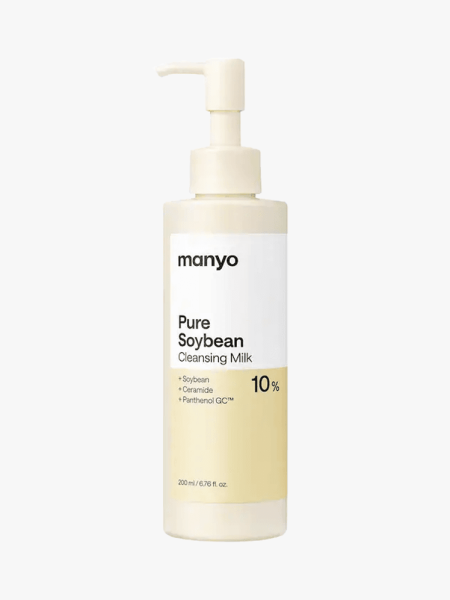
    Ma:nyo Pure Soybean Cleansing Milk in branded component on a light gray backgroundSave to wishlistSave to wishlist

    Ma:nyo

    Pure Soybean Cleansing Milk

    $21

    Sephora

    Former Allure senior commerce editor Sarah Felbin applying the Ma:nyo Pure Soybean Cleansing Milk

    Sarah Felbin

    Why we love it: Already in a committed relationship with Ma:nyo's Best of Beauty-winning Pure Cleansing Oil? Consider its Pure Soybean Cleansing Milk the gentler, creamier addition to your cleansing lineup. The milky, all-in-one formula is particularly well suited to combination-to-dry and sensitive skin, thoroughly whisking away makeup and excess oil without leaving your face with that squeaky-clean, tight feeling. At its center is wild soybean extract fermented for a whopping 120 hours, a process that breaks down the ingredient's components and creates a lightweight, nourishing formula that smooths the look of skin texture and keeps excess sebum in check. Sunflower and jojoba seed oils do much of the makeup-melting work while replenishing skin with emollient moisture, and a supporting cast of ceramides, panthenol, hyaluronic acid, cica, and fig helps hydrate, soothe, and support the moisture barrier.

    Tester feedback from former senior commerce editor Sarah Felbin

    AccordionItemContainerButtonLargeChevron

    “This might be the gentlest cleanser I've ever used. My skin is super-sensitive—some cleansers are too harsh and leave my face feeling dry and tight (not fun). But Ma:nyo's new cleansing milk barely foams up at all and feels more like a moisturizer than a face wash. It's so gentle, I was surprised by how well it removed oil and makeup. Dry skin people, you'll be obsessed with this one.” —Sarah Felbin, former senior commerce editor

    More to know

    AccordionItemContainerButtonLargeChevron

    • Key ingredients: soybean extract, ceramides, panthenol, hyaluronic acid, cica, fig, sunflower seed and jojoba seed oils
    • Who it's for: everyone, especially those with combination or dry skin
    • Fragrance-free: yes

    Sleeping Beauty: Sungboon Editor Deep Collagen Power Boosting Mask
    Sungboon Editor Deep Collagen Power Boosting Mask in branded component on a light gray backgroundSave to wishlistSave to wishlist

    Sungboon Editor

    Deep Collagen Power Boosting Mask

    $24

    Sephora

    Allure shopping market editor Sarah Hoffmann removing the Sungboon Editor Deep Collagen Power Boosting Mask

    Sarah Hoffmann

    Why we love it: If plumper skin is the goal, Sungboon Editor’s Deep Collagen Power Boosting Mask certainly doesn’t skimp on the ingredients meant to get you there. Its claim to fame is the sheer amount of its star ingredient: 2,160,000 ppb of low-molecular-weight collagen. (PPB, or parts per billion, is a way of expressing an ingredient’s concentration within a formula.) Smaller collagen fragments draw moisture to the skin, supporting the appearance of firmness and elasticity. “I like how this mask comes in two parts, so you can adjust as needed. In addition to its high collagen content, it contains multiple peptide ingredients to deliver a powerful, hydrating punch that’s still great for sensitive skin,” says Jane Yoo, MD, a dual board-certified dermatologist and Mohs surgeon based in New York City. Hyaluronic acid piles on even more hydration, while ceramides support the moisture barrier and soothing extracts like cica keep skin feeling comfortable—all adding up to that bouncy, glass-skin finish.

    Tester feedback from Allure shopping market editor Sarah Hoffmann

    AccordionItemContainerButtonLargeChevron

    “This mask was my first foray into overnight sheet masks, and I'm simply obsessed. When you first apply the mask, it's opaque, then when you wake up, and all of that delicious, collagen-packed serum has been absorbed, it's totally clear. So cool, right? If you're worried about it slipping around overnight, don't worry—you have to sit still for about 20 minutes when you first apply it, but after that, it's pretty secure, and you can move about the cabin. I roll around a lot when I sleep, and it was still tacked to my face when I woke up the next morning. These masks are a great way to lock in a bit of extra hydration, especially if you're prone to occasional skin dehydration like I am.” —Sarah Hoffmann, commerce market editor

    More to know

    AccordionItemContainerButtonLargeChevron

    • Key ingredients: collagen, Centella asiatica, niacinamide, 9 peptides
    • Who it’s for: everyone, especially those with dry or mature skin
    • How long to use: 3-4 hours or overnight
    • Fragrance-free: yes

    Light as Air: Ma:nyo Air Light Moisturizing Sunscreen Cream SPF 50
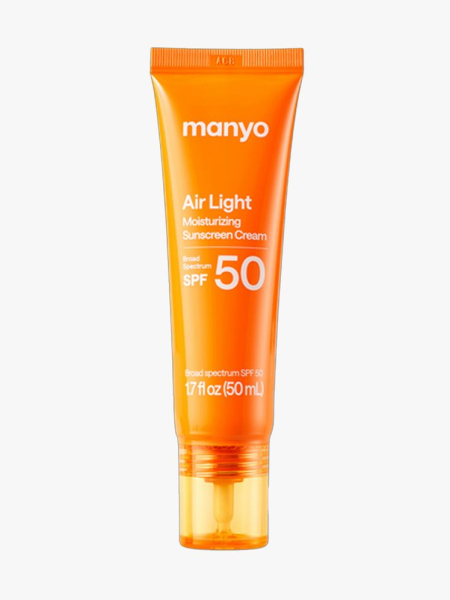
    Manyo Air Light Moisturizing Sunscreen Cream SPF 50 in branded tube component on a light gray backgroundSave to wishlistSave to wishlist

    Ma:nyo

    Air Light Moisturizing Sunscreen Cream SPF 50

    $18

    Sephora

    Han applying the Ma:nyo Air Light Moisturizing Sunscreen Cream SPF 50

    Sarah Han

    Why we love it: Ma:nyo’s Air Light Moisturizing Sunscreen Cream SPF 50 feels less like a sunscreen and more like your favorite lightweight moisturizer that just happens to come with serious sun protection. Its airy feel comes in part from ensulizole, an FDA-approved, water-soluble UV filter that lends itself well to less greasy-feeling formulas. On the hydration front, nano-hyaluronic acid and hydrolyzed hyaluronic acid draw in and hold onto moisture for a plumper, more supple feel without piling on the weight. And because sun spots can still happen even when you’re diligent about reapplying sunscreen (you are, aren’t you?), the formula doubles down on discoloration care with tranexamic acid and niacinamide to improve the look of existing dark spots and uneven tone, plus antioxidant vitamin E to defend against environmental stressors.

    Tester feedback from Han

    AccordionItemContainerButtonLargeChevron

    “Korean sunscreens are so good that it's honestly hard for one to stand out from the rest. (I try a lot of them, ok?) However, thanks to the US banning sales of non-FDA-approved sunscreen filters, our options have gotten a bit more interesting. I tested Ma:nyo’s Air Light SPF for a few months before it even launched (thanks to a sample I got during Best of Beauty testing), and have been smitten with it ever since. It has that serum-y texture I love in my sunscreens, melting into my skin super quickly—because I can't be bothered to rub in sunscreen for 30seconds when there are much faster options! It's super breathable and layers beautifully without a trace of pilling.” —Sarah Han, commerce editor

    More to know

    AccordionItemContainerButtonLargeChevron

    • Key ingredients: ensulizole, nano-hyaluronic acid, hydrolyzed hyaluronic acid, tranexamic acid, niacinamide
    • Who it’s for: everyone, especially those with uneven skin tone
    • Fragrance-free: yes

    Root Awakening: Dr.ForHair Folligen Thickening Shampoo
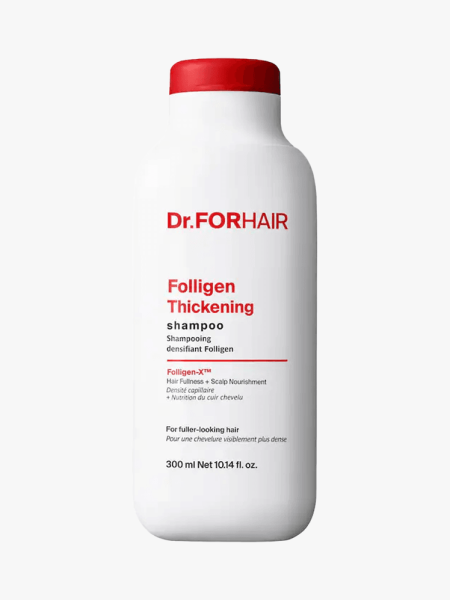
    Dr.ForHair Folligen Thickening Shampoo in branded component on a light gray backgroundSave to wishlistSave to wishlist

    Dr.ForHair

    Folligen Thickening Shampoo

    $24

    Sephora

    Why we love it: The K-beauty treatment doesn’t end at your hairline—Korean hair care puts scalp health front and center, too. Dr.ForHair’s Folligen Shampoo follows suit, making it an especially good match for oily, irritated, or sensitive scalps, including those experiencing thinning or excessive shedding. At the center is the brand’s proprietary Folligen Complex, which combines caffeine, biotin, peptides, and panthenol to care for both scalp and strands. Caffeine supports healthy follicle function, biotin promotes keratin production, peptides reinforce the hair fiber, and moisturizing panthenol softens hair and soothes dryness. Niacinamide lends additional barrier support, while mild exfoliating ingredients like phytic acid whisk away excess oil and buildup that can leave the scalp feeling itchy or uncomfortable. For maximum scalp-care points, don’t immediately rinse: Work the lather into your roots with your fingertips (or a scalp massager) and give it a moment before washing it away.
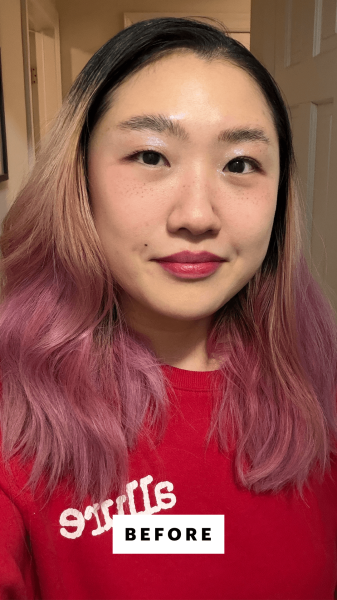
    Han before applying the Dr.ForHair Folligen Shampoo

    Han before applying the Dr.ForHair Folligen Thickening Shampoo

    Sarah HanHan after applying the Dr.ForHair Folligen Shampoo
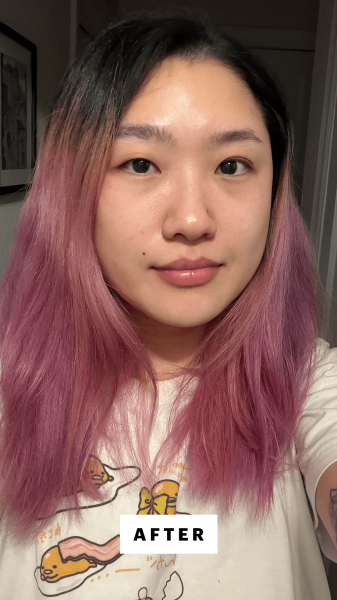
    Han after applying the Dr.ForHair Folligen Thickening Shampoo

    Sarah Han

    Tester feedback from Han

    AccordionItemContainerButtonLargeChevron

    “I'm slowly finding out that hydrating shampoos aren't doing my hair many favors—well, that and after a week of procrastinating wash day, my scalp is in need of a deeper cleanse than what the former is capable of. I first found out about Dr.ForHair through its sub-brand Unove (which makes a fantastic hair mask!), so I went into this shampoo trial with high hopes. I love how gentle it feels, despite being a clarifying formula, and it really gets to the roots of my excess oil and dead cells. By the second shampoo (which I always do, especially since I wash my hair…two times a week max, and that’s on a good week), it forms a gigantic cloud of foam basically as soon as it touches my hair—so satisfying and so indicative of how well it's working. My scalp always feels lighter, softer, and refreshed.” —Sarah Han, commerce editor

    More to know

    AccordionItemContainerButtonLargeChevron

    • Key ingredients: Folligen Complex (caffeine, biotin, peptides, panthenol), niacinamide, phytic acid
    • Who it’s for: people with thinning or aging hair
    • Fragrance-free: yes

    Stick Around: Abib Quick Sunstick Protection Bar SPF50+
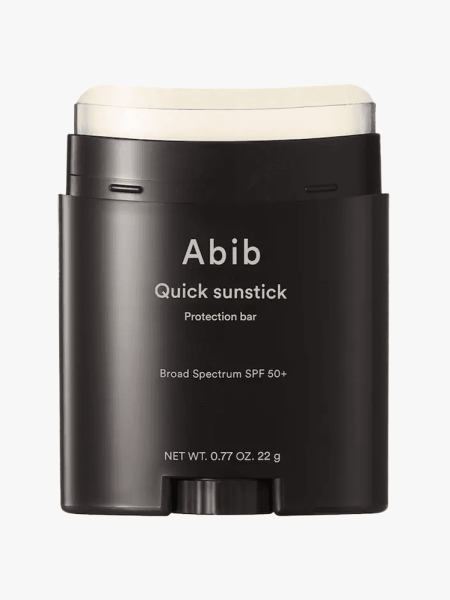
    Abib Quick Sunstick Protection Bar SPF50+ in branded component on a light gray backgroundSave to wishlistSave to wishlist

    Abib

    Quick Sunstick Protection Bar SPF50+

    $28

    Sephora

    Why we love it: Reapplying sunscreen is practically ingrained in K-beauty culture, and products like Abib’s Quick Sunstick Protection Bar SPF 50+ make the habit a whole lot easier to keep up with. Instead of dealing with a liquid formula (and messy hands) when you’re out and about, this curved stick hugs the contours of your face and glides on with a clear, silky finish that makes midday touch-ups especially easy—even over makeup. Its broad-spectrum SPF 50+ protection comes courtesy of four chemical UV filters (avobenzone, homosalate, octisalate, and octocrylene), but there’s plenty happening on the skin-care side, too: Sodium hyaluronate and glycerin draw in moisture, while squalane, argan, olive, and tamanu oils soften and condition dry skin. Aloe and Centella asiatica lend soothing benefits, antioxidant-rich green tea defends against environmental stressors, and ceramides support the skin barrier. Between the nourishing formula and convenient packaging, “I forgot to reapply” is officially a much harder excuse to make.

    More to know

    AccordionItemContainerButtonLargeChevron

    • Key ingredients: homosalate 9.5%, octocrylene 5%, octisalate 4.5%, avobenzone 3%, sodium hyaluronate, glycerin, squalane, argan, olive oil, tamanu oil, aloe, Centella asiatica
    • Who it’s for: everyone, especially those with dry skin
    • Fragrance-free: yes

    Green Means Glow: Fully Green Tomato Clay Mask Cleanser
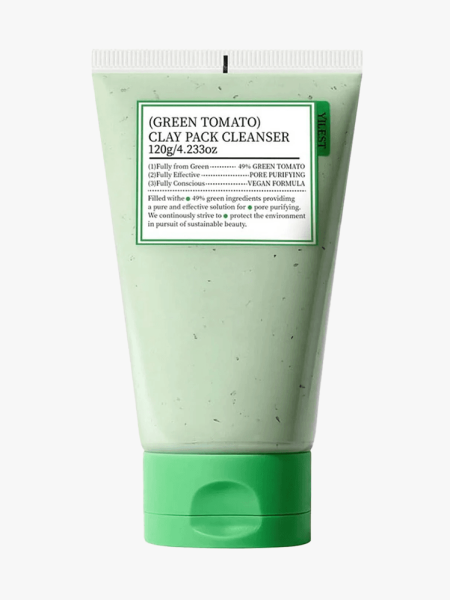
    Fully Green Tomato Clay Mask Cleanser in branded tube component on a light gray backgroundSave to wishlistSave to wishlist

    Fully

    Green Tomato Clay Mask Cleanser

    $20

    Sephora

    Why we love it: Fully may be a newer name on the K-beauty scene, but it’s already found its niche: green tomatoes and really, really clean pores. Its Green Tomato Clay Mask Cleanser—the standout of its pore-focused lineup—nabbed the number-two spot in the wash-off mask category in Hwahae’s 2025 Beauty Awards. And the tomato isn’t just there to make the ingredient list more interesting: Tomato fruit water delivers antioxidant benefits and helps skin look smoother and more refined. Kaolin and bentonite team up with colloidal clay to soak up excess sebum and sweep away pore-clogging buildup, while corn mint powder lends a little extra oil-absorbing power. But this isn’t the kind of clay mask that leaves your face feeling shrink-wrapped afterward: Glycerin and beta-glucan replenish moisture, while cica and ceramides soothe and support the skin barrier.

    More to know

    AccordionItemContainerButtonLargeChevron

    • Key ingredients: tomato fruit water, kaolin, bentonite, colloidal clay, corn mint powder, glycerin, beta-glucan, cica, ceramides
    • Who it’s for: people with oily skin or large pores
    • Fragrance-free: yes

    Damage Control: FromLabs Protein Capsule Hair Repair Leave In Conditioner
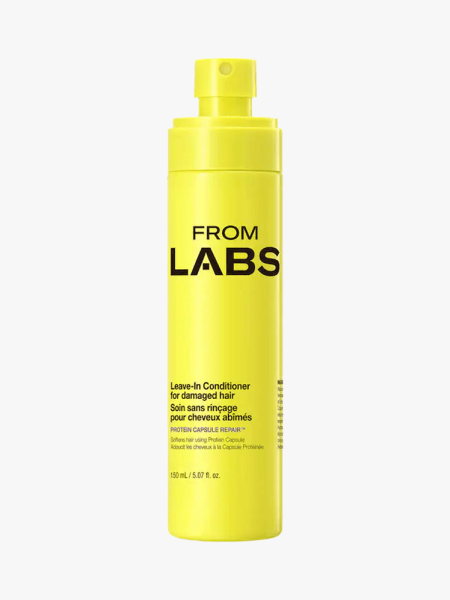
    FromLabs Protein Capsule Hair Repair Leave In Conditioner in branded component on a light gray backgroundSave to wishlistSave to wishlist

    FromLabs

    Protein Capsule Hair Repair Leave In Conditioner

    $20

    Sephora

    Why we love it: FromLabs is known for bringing the kind of intensive hair treatments you’d expect from a buzzy Cheongdam-dong salon straight into your bathroom—and its Protein Capsule Hair Repair Leave-In Conditioner does it without adding another rinse-out step to your routine. The ultrafine mist can be spritzed onto damp or dry hair to tackle frizz, tangles, and dryness, with the brand’s proprietary three-layer Protein Capsule Repair technology coating damaged areas and delivering strengthening proteins (keratin, silk, soy, and wheat, to name a few) to the hair.

    Meanwhile, glycerin and hydroxyethyl urea attract moisture, while silicones smooth the cuticle and add slip without the greasy finish you might expect from such a repair-heavy formula. It even provides heat protection up to 428 degrees Fahrenheit, making it an easy pre-blowout step—and the dewy rose and blackcurrant scent is a nice little nod to the fancy-salon experience.

    More to know

    AccordionItemContainerButtonLargeChevron

    • Key ingredients: keratin, silk, soy, wheat, glycerin, hydroxyethyl urea, silicones
    • Who it’s for: people of all hair types with damage
    • Fragrance-free: no

    Easy on the Eyes: Bioheal BOH Probioderm Collagen Remodeling Eye Patch
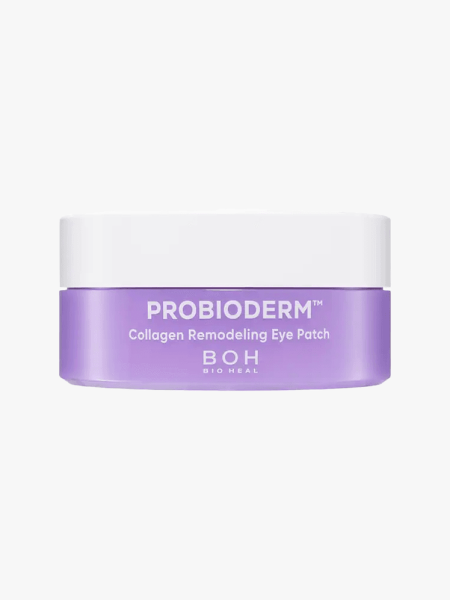
    Bioheal BOH Probioderm Collagen Remodeling Eye Patch in branded tub component on a light gray backgroundSave to wishlistSave to wishlist

    Bioheal

    BOH Probioderm Collagen Remodeling Eye Patch

    $22

    Sephora

    Why we love it: Think of Bioheal BOH’s Probioderm Collagen Remodeling Eye Patches as a cheat sheet to some of K-beauty’s buzziest ingredients—and a much more convincing way to fake a full night’s sleep. Olive Young’s in-house brand packs these eye patches with multiple forms of collagen alongside hydrolyzed elastin to give tired undereyes a plumper, smoother, more bouncy appearance. PDRN (DNA fragments of salmon sperm DNA) joins what can only be described as a peptide party (acetyl hexapeptide-8, copper tripeptide-1, palmitoyl pentapeptide-4, and plenty more) to soften the look of fine lines and support firmer-looking skin. Meanwhile, glycerin, betaine, sodium hyaluronate, panthenol, and beta-glucan flood the area with hydration, while niacinamide brightens the look of dullness and uneven tone.

    More to know

    AccordionItemContainerButtonLargeChevron

    • Key ingredients: collagen, hydrolyzed elastin, PDRN, glycerin, betaine, sodium hyaluronate, panthenol, beta-glucan, acetyl hexapeptide-8, copper tripeptide-1, palmitoyl pentapeptide-4, niacinamide
    • Who it’s for: everyone, especially those with fine lines around the eyes
    • Number of patches: 60
    • Fragrance-free: yes

    Frequently Asked Questions

    Can I trust buying Korean skin-care products online?

    Yes, but where you shop matters—and thankfully, getting your hands on authentic K-beauty in the US is easier than ever. The new Olive Young x Sephora collaboration gives shoppers another mainstream way to discover Korean brands without having to navigate third-party sellers or international shipping. Other trusted options include stateside K-beauty retailers such as Soko Glam, as well as Asia-based retailers like YesStyle, though international orders may take longer to arrive. Amazon carries a huge selection, too, but it requires a little more homework: Sellers and inventory can change frequently, so at Allure, we only include products sold directly by Amazon or the brand itself at the time of writing. (And keep in mind that the listed seller may be a brand’s parent company—for example, Dear Klairs products may be sold by Wishtrend.)

    Meet the experts

    • Claire Chang, MD, a board-certified dermatologist at UnionDerm based in New York City
    • Jane Yoo, MD, a dual board-certified dermatologist and Mohs surgeon based in New York City

    How we test and review products

    When Allure tests a product, our editors look at it from every angle in an effort to best serve you. We review ingredients, scrutinize brand claims, and, when necessary, examine peer-reviewed scientific and medical studies. In addition to testing each and every product that’s included in each and every review, we rely on experts who shape their fields, including dermatology, cosmetic chemistry, and medicine, to help us vet the ingredients and formulas.

    For our list of best Olive Young x Sephora collaboration products, we considered each product’s performance across five primary categories: product ingredients and efficacy, packaging, fragrance, texture, and product wear. Every product was determined to have excelled in each category by our editorial team, which is composed of in-house writers and editors as well as contributors—along with special consideration from dermatologists. To learn more information on our reporting and testing processes, read our complete reviews process and methodology page.

    Our staff and testers

    A beauty product is a personal purchase. You might be searching for a face cream to address persistent dryness or a new nail product to add to your Sunday self-care routine; you may simply be browsing around for the latest launches to hit the hair market. No matter what you seek or your individual needs and concerns, Allure wants to ensure that you love anything we recommend in our stories. We believe that having a diverse team of writers and editors—in addition to the wide range of outside testers and industry experts we regularly call upon—is essential to reaching that goal.

    After all, can we really say a skin-care product is the "best" for people over 50 if the only testers we've solicited opinions from folks who have yet to hit 30? Can we honestly deem a high-end diffuser worthy of your hard-earned cash if it's never been tested on curls? We're proud that our staff spans a wide range of ages, skin tones, hair textures, genders, and backgrounds, which means that we are able to fairly assess any beauty product that comes into the beauty closet.
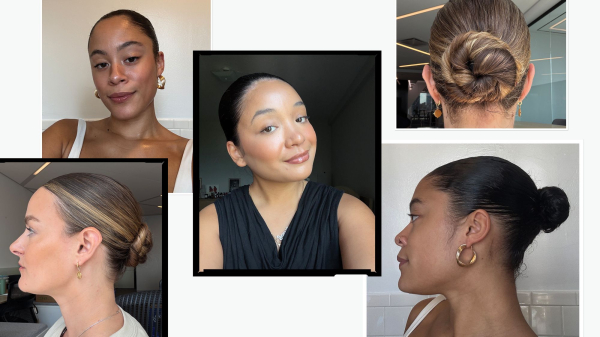

  • Medik8 Liquid Peptides Serum Review

    Medik8 Liquid Peptides Serum Review

    Image may contain Bottle Cosmetics Perfume and Lotion$68 at Medik8Save StorySave this storySave StorySave this story

    TL;DR:

    • What it is: A lightweight but potent peptide serum
    • What it does: Helps plumps up skin and smooths fine lines
    • Who it’s for: Anyone looking for a firming, wrinkle-reducing treatment

    Everyone is talking about peptides these days, but at Allure, we’ve been waxing poetic about the ingredient—used topically—for decades.

    Quick overview: Peptides, best known for boosting collagen production, are tiny chains of amino acids that act as messengers between skin cells, instructing them to hydrate and target skin elasticity. They don’t completely erase signs of aging, but they certainly help postpone the process.

    In this serum, there are more than a handful (!) of potent peptides (hexapeptide 8, copper palmitoyl heptapeptide-14, palmitoyl tripeptide-38, to name a few), along with plumping hyaluronic acid and moisture-locking glycerin, that work together to smooth out fine lines and wrinkles, as well as firm skin’s texture to give it a tighter, more lifted look.

    And although it sounds like something out of a dermatologist’s office, it’s actually quite gentle and super easy to add to your routine. After cleansing, I’ll smooth a few pumps onto my face and neck, making sure to work it into areas that need some extra peptide TLC (my forehead, especially). The lightweight, silky texture dries down fast, layers well under moisturizer (and sunscreen if applying in the morning), and doesn’t pill—the ultimate skin-care trifecta!

    Medik8 Liquid Peptides Serum is in the August Allure Beauty Box

    GET THE BOXMedik8 Liquid Peptides

    Medik8 Liquid Peptides

    $68 at Medik8$68 at Medik8

  • How to Take Care of Your Natural Hair If You Have Scalp Eczema

    How to Take Care of Your Natural Hair If You Have Scalp Eczema

    scalp eczemaAdobe StockSave StorySave this storySave StorySave this story

    If you are wearing your hair in its natural texture, unmanipulated by heat or chemicals, but also managing scalp eczema, keeping your natural hair healthy can be a bit complicated. Between flakes that hide under coils, itches that show up mid-style, and products that promise moisture but deliver flare-ups instead, it’s easy to feel like your hair and your scalp are working against each other.

    The good news is dermatologists say you don’t have to choose between embracing your natural texture and calming your scalp. Below, find doctor-approved tips on how to keep your eczema in check so your hair and scalp can look and feel their best

    Meet the experts:

    • Jeanine Downie, MD, a dermatologic surgeon in Montclair, New Jersey.
    • Tanya Kormeili, MD, a board-certified dermatologist and founder of Derm & Rejuvenation Institute, based in Santa Monica.
    • Nicole Negbenebor, MD, a board-certified dermatologist at University of Iowa Health Care.
    • Purvisha Patel, MD, a board-certified dermatologist in Memphis.
    • Heather Woolery-Lloyd, MD, FAAD, a board-certified dermatologist in Miami.

    In this story:

    • Understanding scalp eczema
    • Why scalp eczema affects Black women more
    • Identifying your triggers
    • Treatment options
    • Minimizing future flare-ups

    Understanding scalp eczema

    There are actually seven types of eczema, but a lot of the time when people say “eczema,” they are referring to atopic dermatitis, the most common of these inflammatory skin conditions. “Atopic dermatitis tends to run in families and causes sensitive, dry, and itchy skin,” explains Heather Woolery-Lloyd, MD, the director of the University of Miami Miller School of Medicine’s Skin of Color Division. The impacted patches are discolored and can be crusty, scaly, or oozy.

    Atopic dermatitis affects the skin barrier, which Dr. Woolery-Lloyd describes using a brick-and-mortar analogy: Skin cells are the bricks, and the body’s natural lipids are the mortar holding them together. If you have atopic dermatitis, a genetic mutation can affect the structural proteins—including a notable one called filaggrin—that help maintain the skin’s structure, leaving the skin barrier compromised. Dr. Woolery-Lloyd likens this to cracked bricks with weakened mortar between them. This allows moisture to escape and irritants to sneak in. People with atopic dermatitis also have an overactive immune system, which can trigger inflammation. The result: an uncomfortable itch. Scratching may provide relief in the moment, but “it damages the barrier further, trapping people in a frustrating itch-scratch cycle,” Dr. Woolery-Lloyd says.
    Atopic dermatitis can happen anywhere, including the scalp, but it isn’t the only form of eczema that shows up on the top of your head. Other possibilities are seborrheic dermatitis and contact dermatitis. Seborrheic dermatitis often occurs when your immune system overreacts to a type of natural yeast that lives on the skin, which triggers flaking and scaling. (Dandruff is actually a mild form of seborrheic dermatitis.) With contact dermatitis, a product like a soap or chemical irritates the skin or causes an allergic reaction, leading to symptoms like itching, discoloration, swelling, or even blisters.

    Why scalp eczema affects Black women more

    Many health care providers aren’t familiar with how eczema presents on darker skin, which can make getting a diagnosis more challenging. While eczema sometimes appears red or pink on fairer skin tones, it may look skin-colored, gray, darker, or lighter than the surrounding area on melanin-rich skin, says Nicole Negbenebor, MD, a clinical assistant professor of dermatology at the University of Iowa.

    This failure to recognize the signs of eczema on darker skin is common partly because of medical training. Historically, the representation of melanin-rich skin in dermatology textbooks and clinical image databases has been lacking. Jeanine Downie, MD, a dermatologic surgeon in Montclair, New Jersey, adds that patients of color have also been underrepresented in clinical trials, leaving important gaps in understanding how conditions may present across different populations.

    Diagnosing scalp eczema can be especially complicated, in part because it shares symptoms with other skin conditions. One of those conditions is tinea capitis, a fungal infection that Black women are at higher risk of developing. In fact, tinea capitis in Black children is often mistaken for seborrheic dermatitis, since the two conditions can look very similar. As a result, people of color may face delays in getting the correct diagnosis of whichever condition they actually have, which can significantly worsen symptoms either way.

    Another factor is that hair-care practices common in the Black community can cause women of color to experience more severe scalp-eczema symptoms, Dr. Woolery-Lloyd says. For example, styling techniques like glue-in extensions can irritate an already inflamed scalp, and layering multiple products, common in textured hair-care routines, increases the likelihood of encountering a trigger ingredient that causes a flare-up.

    But all of that doesn’t mean you’re doomed to struggle with an itchy, flaky scalp for the rest of your life. Here is what dermatologists want you to know.

    First things first: Identify your triggers

    Not every natural hairstyle or styling product plays nicely with an eczema-prone scalp, and being aware of the most common triggers can help you know what to look out for. Remember, though, that the below list isn’t exhaustive. If you’re trying a new product, test it first. Placing a dab behind the ear and leaving it on for 24 to 48 hours can help catch a problem ingredient early.

    Fragrances and essential oils

    “These are some of the most common triggers for scalp-eczema flares,” says Dr. Negbenebor. Even products marketed as “natural” or “clean” can be irritating, and it’s a misconception that natural ingredients are always safer, she adds. While almost any fragrance or essential oil could do you wrong, depending on your triggers, Tanya Kormeili, MD, a board-certified dermatologist and founder of Derm & Rejuvenation Institute, based in Santa Monica, points to a few known irritants to watch for: tea tree, cinnamon, and rosemary.

    Heavy oils and butters

    Natural-hair routines can lean hard on oils, and sadly, that may work against you. Purvisha Patel, MD, a board-certified dermatologist in Memphis, says the yeast that often drives seborrheic dermatitis needs warmth and moisture to thrive, and many textured-hair staples, that include thick ingredients like shea butter and cocoa butter, can trap sweat and heat against the scalp, which may worsen the condition, Dr. Negbenebor explains. Switching to a lighter product like SEEN Restore Scalp Serum, which has a National Eczema Association Seal of Acceptance, may help improve your symptoms.

    Preservatives and adhesives

    The acrylates, latex, or solvents often used in hair-bonding glues can act as potent irritants when applied directly to an already irritated scalp, says Dr. Woolery-Lloyd. Preservatives like methylisothiazolinone, common in water-based products like hair masks, leave-in serums and treatments, and styling products to extend shelf life, can be similarly aggravating.

    Adhesives from wigs and weaves are another common trigger worth watching, along with the tape and glue used in some bonding or tape-in methods.

    Know your treatment options

    Plain dandruff and a more inflamed seborrheic dermatitis flare-up aren’t always easy to tell apart on your own, but the timeline is a good clue. Dr. Negbenebor’s rule of thumb: a drugstore medicated shampoo like Head & Shoulders should start resolving ordinary dandruff within several days to a week. If it doesn’t or if you’re also seeing inflammation, thick crusts, cracking, or bleeding, that’s a sign you’re dealing with something more than mild dandruff and it’s time to bring in a dermatologist rather than continuing to troubleshoot on your own.

    This is not the time to wait things out. Dr. Downie says she’s seen delayed treatment allow mild eczema to spread and intensify, becoming more uncomfortable, painful, and disruptive to daily life. Each case is unique, but here’s where dermatologists tend to start when treating these conditions.

    Steroid-free topicals

    For patients who need active treatment, Dr. Woolery-Lloyd’s first recommendation during a flare is a topical nonsteroidal (a.k.a. steroid-free) anti-inflammatory, a newer class of prescription medication that calms irritation without the skin-thinning risks steroids carry with long-term use. When someone is experiencing a scalp flare, she favors a lightweight, alcohol-free foam formula that works across hair types and textures without weighing it down or disturbing the style.

    Medicated and antifungal shampoos

    Special shampoos—available both over the counter and by prescription—contain active ingredients to fight eczema-related flaking and inflammation. They can be especially helpful if you have seborrheic dermatitis, since many contain antifungals, which stop the growth of yeast. Your dermatologist can recommend which you should try, but some drug store options include ketoconazole (found in Nizoral Anti-Dandruff), selenium sulfide (Selsun Blue), salicylic acid (Ouai Anti-Dandruff Shampoo), zinc pyrithione (the active ingredient in most Head & Shoulders formulas), and coal tar (MG217 Therapeutic Shampoo).

    Make sure to talk with your doctor about the best way to use these shampoos with your hairstyle. For instance, when people have their hair in scalp-covering protective styles like cornrows and flat twists for weeks at a time, Dr. Negbenebor suggests applying a medicated treatment shampoo directly to parted sections, massaging it in, letting it sit for five minutes, and then rinsing with water.

    Gentler products

    This goes for everyone with scalp eczema, but especially those with contact dermatitis: dermatologists commonly recommend simplifying your routine, using fewer products overall, and less frequent product changes, since this makes it easier to identify what might be triggering a flare. Look for options that are hypoallergenic and fragrance-free with the National Eczema Association Seal of Acceptance. (Research shows many products labeled “hypoallergenic” or “fragrance-free” that haven’t been endorsed by the organization don’t always live up to their claims.)

    Diet and gut health

    It’s not just what goes on the scalp that matters. Gut inflammation can make skin inflammation worse, and some research suggests an anti-inflammatory eating pattern, one that includes probiotic foods like yogurt and kimchi and limits highly processed, high-sugar foods, may support skin health as well. Some dermatologists also recommend a probiotic supplement as a low-lift addition to an eczema-management routine, alongside topical treatment.

    Minimize future flare-ups

    While treating active eczema can go a long way toward providing relief, there are also steps you can take to help prevent flares in the first place. In addition to avoiding your known triggers, here are some other things you can do.

    Limit tension and traction

    Tight styles aren’t just something to avoid until your scalp calms down—they’re worth limiting as an ongoing precaution. That’s because tension and eczema, while technically separate issues, feed off each other, Dr. Downie says. During an active flare the added strain of a tight style may worsen existing inflammation, and even on a calm scalp, tension can be enough to trigger a new flare. The combination of tension and eczema can also lead to a condition called traction folliculitis, Dr. Downie says. This causes small but often painful red pustules that cluster at the places where the hairstyle is pulling the tightest.

    Reduce style duration

    Protective styles buy back time, cut down on daily manipulation, and let natural hair rest between wash days, which is why they’re such a staple. But the styles themselves can introduce their own triggers, from adhesives in wigs and weaves to tension at the hairline from tight braids or twists. Protective styles aren’t off-limits, but they do require a different maintenance routine: Sticking to lower-tension installs, avoiding heavy oils or products that can trap yeast and buildup underneath, and making sure you don’t go too long between washes can all help reduce flares.

    Dr. Woolery-Lloyd suggests keeping styles in for two to four weeks rather than stretching them closer to two months (we know, we know) and skipping heavy edge control or gel applied directly to the scalp.

    Be strategic when using synthetic hair

    You can still incorporate synthetic hair into your style, but add in a pre-rinse step first to minimize the strands’ impact on your eczema. Rinsing helps strip away the alkaline preservative film that often coats synthetic braiding hair. Even human hair can contain irritating processing chemicals that you should rinse out before installation, says Dr. Woolery-Lloyd.

    Nail your wash schedule and technique

    How often you wash your hair matters, and you don’t want to wait until your scalp feels greasy or itchy to suds up. As a general rule, Dr. Downie recommends washing hair at least once a week, regardless of hair type, and washing more often if you live in a hot, humid climate or exercise frequently.

    When it comes to prescription-strength medicated washes specifically, her rule of thumb is once a week when you aren’t experiencing a flare and upping that to two or three times a week if you are (though very curly hair may warrant less frequent washing to avoid overdrying the scalp). Many medicated shampoos can be drying, so Dr. Downie recommends following up with a deeply hydrating shampoo and conditioner on days you aren’t using a medicated formula. SEEN has a nourishing fragrance-free line endorsed by the National Eczema Association, as does Odele.

    For more stubborn cases of eczema, a prescription clobetasol shampoo can also be effective. After washing with it, Dr. Downie suggests reaching for a deep conditioner to help replenish moisture. A good option endorsed by the National Eczema Association: SEEN Conditioner, Fragrance-Free, which can be rinsed out or used as a leave-in treatment.

    The moisturizing step matters more than you might think for curly and coily hair types. “The scalp may produce more sebum, but hair follicle shape, type, and curl pattern often make it difficult for scalp oil to travel down the shaft toward the ends,” Dr. Downie says. That’s why scalp cleansing and hair moisturizing are both essential; it’s not just one or the other.

    And whenever you wash your wigs, weaves, or braids, dry the roots completely afterward, as damp hair left for hours creates a humid environment yeast thrives in.

  • 7 Best Eyebrow Pencils for Older Women with Wiry or Thinning Brows

    7 Best Eyebrow Pencils for Older Women with Wiry or Thinning Brows

    A collage of brow pencils on a pink backgroundCollage: Jemeria Davison; Source images: Courtesy of brandsSave StorySave this storySave StorySave this story

    As brows become sparser, finer, or lighter with age, the best eyebrow pencils for older women can make a big difference. Over time, brow hairs may also become more wiry, while the skin underneath can develop more texture—meaning the brow pencil that you’ve always used can suddenly look too harsh or be harder to apply. Luckily, our favorite formulas for mature brows come in nuanced, realistic shades (including options for gray hair) with fine tips and blendable textures that make it easier to add definition without looking drawn on.

    Even though brows don’t take up much real estate, a little definition can make a surprisingly big difference. “Brows frame the shape of the face and restore contrast,” says ​Kierra Lanice Wray, a makeup artist based in Lansing, Michigan. As brow hairs lighten or thin, “you start to lose shape and definition,” she says, which can make the eyes appear less lifted.

    Our Top Eyebrow Pencils for Older Women

    • Best for Fully Gray Brows: Benefit Goof Proof Waterproof Easy Shape & Fill Eyebrow Pencil in Cool Grey, $28
    • Best for Dark Hair Going Gray: Jones Road the Brow Pencil in Grey, $22
    • Best for Salt-and-Pepper Brows: Wunderbrow Micro-Classic Easy Fill Brow Pencil in Taupe Grey, $10
    • Best for Wiry/Textured Brows: Kosas Brow Pop Dual Action, $26

    And if your hair has gone gray, Wray cautions against automatically reaching for the shade you used years ago. “Gray isn’t a lighter shade of brown; it’s its own color and lacks pigment,” she says. Rather than drawing on a whole new brow—which can create harsh contrast—the goal is to softly fill sparse areas and define the shape you already have. Ahead, we rounded up the best eyebrow pencils for older women to do exactly that.

    Frequently Asked QuestionsAccordionItemContainerButtonLargeChevron

    • How do you choose your eyebrow pencil shade for gray brows?
    • How do you avoid harsh-looking brows?
    • Meet the experts
    • How we test and review products
    • Our staff and testers

    Best for Fully Gray Brows: Benefit Cosmetics Goof Proof Brow Pencil in Cool Grey

    Benefit Goof Proof Waterproof Easy Shape & Fill Eyebrow Pencil in Cool Grey in branded component on a light gray backgroundSave to wishlistSave to wishlist

    Benefit Cosmetics

    Goof Proof Brow Pencil in Cool Grey

    $28

    Nordstrom

    $28

    Ulta Beauty

    Why it's worth it: Benefit Cosmetics has been in the brow game for so long that most of us have owned at least one of their pencils at some point. If your brows are entirely gray, the brand’s Goof Proof Easy Shape & Fill Pencil in Cool Grey is as universally flattering as it gets. When brows turn gray, undertone matters: too warm reads unnatural, while overly ashy can veer chalky and dull. “This cool-toned shade keeps gray brows looking natural and believable,” says Tonya Riner, a makeup artist based in Houston, Texas.

    The retractable, angled tip makes shaping intuitive and eliminates the need for sharpening, so the stroke width stays consistent and harder to overdo. “Use the angled edge to fill in sparse areas, then switch to the finer point to add hair-like strokes,” she adds. The attached spoolie brush lets you comb through pigment to soften edges and blur any heavy spots for a more natural finish. And the smooth, castor-oil–based formula blends easily, then sets into long-lasting, 12-hour wear without smudging.

    More to know

    AccordionItemContainerButtonLargeChevron

    • Key ingredients: castor oil, beeswax
    • Shades: 12
    • Features: built-in spoolie, waterproof formula
    • Who it’s for: people with full gray brows

    Best for Dark Hair Going Gray: Jones Road the Brow Pencil in Grey

    Jones Road the Brow Pencil in Grey in branded component on a light gray backgroundSave to wishlistSave to wishlist

    Jones Road

    The Brow Pencil in Grey

    $24

    Jones Road

    Why it's worth it: Choosing a pencil shade for brunettes or black hair that is starting to gray can be tricky, as warmer browns often look too red, while ashy tones can fall flat or chalky. Jones Road’s Brow Pencil adds fullness without laying down a block of heavy color. “This pencil has tiny hair-like fibers in it to create the look of full, natural brows,” says New Jersey-based makeup artist Denise Del Russo. Shea butter, castor seed oil, and plant waxes like candelilla and carnauba give the formula a smooth glide and extra softening, while the jumbo format of the pencil format makes it easier for makeup novices to create light, feathery strokes. “You can fill them in faster and more easily,” says Wray—which makes everyday shaping feel intuitive.

    For the most natural-looking finish, Del Russo recommends pairing it with “a slanted brow brush and spoolie” to shape, blend, and soften the pigment so it meshes seamlessly with both darker and newly gray brow hairs.

    More to know

    AccordionItemContainerButtonLargeChevron

    • Key ingredients: castor oil, shea butter, candelilla wax, carnauba wax
    • Shades: 6
    • Who it’s for: people with wiry or textured brows who still want fullness

    Best for Blonde Hair Going Gray: Victoria Beckham Beauty BabyBlade Eyebrow Pencil in Taupe

    Victoria Beckham BabyBlade Eyebrow Pencil in Taupe in branded component on a light gray backgroundSave to wishlistSave to wishlist

    Victoria Beckham Beauty

    BabyBlade Eyebrow Pencil in Taupe

    $35

    Nordstrom

    $35

    Bluemercury

    Why it's worth it: Blonde brows transitioning to gray can lose both definition and depth, so finding a pencil that stays cool, precise, and natural becomes key. Victoria Beckham’s BabyBlade Eyebrow Pencil handles all three. “This is my favorite for blondes because the taupe is perfectly cool-toned,” says Riner. “The ultra-fine tip makes it nearly impossible to overdo it, so you always end up with a soft, natural, and flattering shape.” The long-wear formula glides on cleanly, but it also treats the brows as it fills: Camellia japonica oil delivers antioxidant-rich hydration, while rosehip seed oil brings essential fatty acids to help keep the skin and brow hairs supple. Each stroke gets you a fuller, better-defined brow that complements blonde-to-gray tones without too much warmth.

    More to know

    AccordionItemContainerButtonLargeChevron

    • Key ingredients: camellia japonica oil, rosehip seed oil
    • Shades: 6
    • Features: built-in spoolie
    • Who it’s for: people with lighter hair tones going gray

    Best for Reddish Hair Going Gray: Anastasia Beverly Hills Fill & Define Brow Pencil in Caramel

    Anastasia Beverly Hills Dual-Ended Fill & Define Powder Perfect Brow Pencil in Caramel in branded component on a light gray backgroundSave to wishlistSave to wishlist

    Anastasia Beverly Hills

    Dual-Ended Fill & Define Powder Perfect Brow Pencil in Caramel

    $26

    Amazon

    $26

    Nordstrom

    $26

    Ulta Beauty

    Why it's worth it: Only 1 to 2% of the world’s population has naturally red hair, which makes red brows a niche all their own, especially once gray starts to enter the picture. The undertone has to stay convincing without going brassy or flat, and it’s easy for a brow pencil to look too heavy. Anastasia Beverly Hills’ Dual-Ended Fill & Define Powder Perfect Brow Pencil in Caramel (light red) or Auburn (soft, deeper red) strikes the right balance for most redheads, says Wray. “While many people do enjoy a mechanical pencil, this traditional wooden pencil has a softer, powder-like formula to look more natural for red hair,” says Wray. “It's very beginner-friendly with a spoolie on the end to brush and blur imperfections.” Mica and plant oils help the color glide and diffuse into a believable finish.

    More to know

    AccordionItemContainerButtonLargeChevron

    • Key ingredients: mica, vegetable oil, cottonseed oil
    • Shades: 8
    • Features: built-in spoolie
    • Who it’s for: redheads going gray

    Best for Salt-and-Pepper Brows: Wunderbrow Micro-Classic Easy Fill Brow Pencil in Taupe Grey

    Wunderbrow Micro-Classic Easy Fill Brow Pencil in Taupe Grey light gray and black eyebrow pencil on light gray backgroundSave to wishlistSave to wishlist

    Wunderbrow

    Micro-Classic Easy Fill Brow Pencil in Taupe Grey

    $6 $5 (17% off)

    Amazon

    $10

    Ulta Beauty

    Why it's worth it: Salt-and-pepper brows can look multidimensional and striking, but finding the right balance takes some finesse: A shade that disappears into darker hairs can look stark against silver strands, while overly matte pigment can flatten all that natural dimension. Wunderbrow’s Micro-Classic Easy Fill Brow Pencil in Taupe Grey is a cool-toned shade that complements gray and silver strands without the warmth of a traditional brown, while its “micro-fine tip keeps the finished result from looking heavy,” says Del Russo.

    The formula combines lightweight emollients with carnauba wax for smooth, controlled application, while silica contributes to its silky feel. Instead of the standard spoolie on the opposite end, “it has a comb to brush through brows,” she adds—a particularly handy swap for wiry or coarse brows, since the individual teeth can separate and coax hairs into place with more precision.

    More to know

    AccordionItemContainerButtonLargeChevron

    • Key ingredients: carnauba wax, silica
    • Shades: 4
    • Features: built-in comb, included sharpener
    • Who it’s for: people with salt-and-pepper or graying brows

    Best for Wiry/Textured Brows: Kosas Brow Pop Dual Action

    Kosas branded pink brow pencil component on light gray backgroundSave to wishlistSave to wishlist

    Kosas

    Kosas Brow Pop Dual Action

    $26

    Sephora

    $26

    Revolve

    $26

    Credo Beauty

    Why it's worth it: Aging often shifts the texture of brow hair, making it coarser and more wiry. “For mature clients, I find that the softer and creamier to medium-firmness of Kosas’ Brow Pop Dual Action works well,” says Del Russo. “It doesn’t require a lot of pressure when applying, glides on smoothly, and doesn’t smudge or smear.”

    The slim tip lets you sketch precise, hair-like strokes around coarser strands, while nourishing jojoba oil, hydrogenated castor oil, and panthenol give the formula a smoothness that’s especially helpful on mature skin. Del Russo’s finishing touch for especially unruly brows: Sweep a tinted brow gel like the Kosas Air Brow Tinted Gel over top to hold hairs in place and add fullness.

    More to know

    AccordionItemContainerButtonLargeChevron

    • Key ingredients: castor oil, panthenol, jojoba oil
    • Shades: 10
    • Features: built-in spoolie
    • Who it’s for: everyone, especially those with wiry brows

    Best for Thinning Brows: Glossier Boy Brow Arch

    Glossier Boy Brow Arch in branded white twist up pencil applicator with brush tip on light gray background with red Allure Best of Beauty seal in the top right cornerSave to wishlistSave to wishlist

    Glossier

    Boy Brow Arch

    $24

    Sephora

    $24

    Glossier

    Why it's worth it: The fewer brow hairs you have to work with, the more every pencil stroke counts—and a precise tip makes creating natural-looking fullness and definition much easier. Glossier’s Boy Brow Arch has a pointed edge for sketching fine, hair-like flicks into sparse spots, while the flat edge shades larger gaps with ease. “The rich, pomade texture also helps the brows appear fuller and stay in place,” says Del Russo, while coconut-derived emollients give the formula enough creaminess to glide on without a heavy hand.

    And if thinning goes beyond a few scattered gaps? Staying power becomes even more important. “If I find myself having to completely draw in a faux brow because the brows are so sparse, a water-resistant, smudge-proof brow product like this is best,” Del Russo says, since you don’t want all that carefully placed definition sliding around.

    More to know

    AccordionItemContainerButtonLargeChevron

    • Key ingredient: coconut emollients
    • Shades: 9
    • Features: built-in spoolie
    • Who it’s for: everyone, especially those with thinning brows that need precise definition

    Frequently Asked Questions

    How do you choose your eyebrow pencil shade for gray brows?

    Choosing a brow pencil for mature women with gray brows comes down to finding the right balance of tone and depth. “If your brows are salt and pepper, when looking for a brow product, go with the lighter or most neutral option to soften the brows and overall appearance of the face,” says Wray. She recommends “going slightly lighter and more neutral as the brows lose pigment.” Go too far in either direction and the effect shifts: “Too light and the brows begin to disappear, and too dark makes them look overly dramatic.” A neutral, softly cool tone usually lands in that flattering middle ground.

    How do you avoid harsh-looking brows?

    For natural-looking brows, Wray says the trick is to mimic what your existing brow hairs already do rather than adding heavy or overly defined strokes. “I always recommend using light pressure and creating short, hair-like strokes,” she says. Instead of drawing new brows on top, you’re “filling in negative space within the brow.” The order matters too: “Your brows should go from light to dark and thick to thin,” so concentrate on defining the tail and arch first, then work toward the center of the face to get natural definition.

    Meet the experts

    • Denise Del Russo, a makeup artist based in New Jersey
    • Tonya Riner, a makeup artist based in Houston, Texas
    • ​Kierra Lanice Wray, a makeup artist based in Lansing, Michigan

    How we test and review products

    Before reviewing any makeup, we ask questions about a number of factors: What ingredients are in it? Does the brand offer a wide shade range inclusive of consumers with all skin tones and undertones? Is it safe for readers who have sensitive skin or wear contact lenses? Is it on the affordable side or more of a splurge? Is its packaging consciously designed or needlessly wasteful?

    For our review of the best eyebrow pencils for older women, we enlisted the help of multiple editors, writers, contributors, cosmetic chemists, and professional makeup artists to review the products. This ensures our testing base spans different skin tones, genders, and dermatological conditions. We considered each product’s performance across four primary categories: ingredients, wear and longevity, packaging, and inclusivity. For more on what's involved in our reporting, check out our complete reviews process and methodology page.

    Our staff and testers

    A beauty product is a personal purchase. You might be searching for a face cream to address persistent dryness or a new nail product to add to your Sunday self-care routine; you may simply be browsing around for the latest launches to hit the hair market. No matter what you seek or your individual needs and concerns, Allure wants to ensure that you love anything we recommend in our stories. We believe that having a diverse team of writers and editors—in addition to the wide range of outside testers and industry experts we regularly call upon—is essential to reaching that goal.

    After all, can we really say a skin-care product is the "best" for people over 50 if the only testers we’ve solicited opinions from folks who have yet to hit 30? Can we honestly deem a high-end diffuser worthy of your hard-earned cash if it’s never been tested on curls? We’re proud that our staff spans a wide range of ages, skin tones, hair textures, genders, and backgrounds, which means that we are able to fairly assess any beauty product that comes into the beauty closet.

  • 6 Best Armpit Brightening Creams and Treatments, According to Derms

    6 Best Armpit Brightening Creams and Treatments, According to Derms

    A collage of skincare jars and tubes on a beige backgroundCollage: Jemeria Davison; Source images: Courtesy of brandsSave StorySave this storySave StorySave this story

    If dark underarms make you feel self-conscious or as though you can’t go sleeveless, good news: The best armpit brightening creams and treatments can help. This extremely common (and normal!) issue can occur from shaving, ingrown hairs, and product buildup—or regular old friction in your armpit area, which can be hard to avoid. On top of that, post-inflammatory hyperpigmentation after a bout of irritation can also make your pits appear darker.

    Luckily, there’s a wide range of dermatologist-approved ingredients that fade discoloration, soothe irritation, and smooth uneven texture, all while being gentle enough for the underarm area. Niacinamide, vitamin C, and alpha arbutin improve overall brightness, while tranexamic acid, azelaic acid, and kojic acid can help fade or reduce pigmentation, says Debra Luftman, MD, a board-certified dermatologist based in Los Angeles, California. Mild chemical exfoliants like lactic acid, glycolic acid, and mandelic acid also help by removing dead, pigment-packed skin cells. But proceed with caution: “Because the underarm skin is delicate, the best products use ingredients that brighten gradually while minimizing irritation,” Dr. Luftman explains. Translation: Slow and steady wins this race.

    Our Top Armpit Brightening Creams

    • Best Overall: Topicals Faded Brightening & Clearing Serum, $38
    • Best for Sensitive Skin: Paula’s Choice 5% Niacinamide Body Serum, $37
    • Best Budget: The Ordinary Azelaic Acid Suspension 10%, $12
    • Best Deodorant: Cyklar Mandelic Acid Deodorant, $20

    You should see some improvements after eight to 12 weeks of daily use—nothing beats consistency. And if your skin is especially sensitive, you can start by using your brightener of choice every other day, then increasing to applying it every day. Thanks to these products’ lightweight, hydrating formulas that don’t sting or pill under deodorant, they’ll slot seamlessly into your body-care routine. Ready to lighten up? Below, you’ll find expert- and editor-approved favorites that deliver major brightening results.

    Frequently Asked QuestionsAccordionItemContainerButtonLargeChevron

    • What causes underarm discoloration?
    • How can you minimize underarm discoloration?
    • Is it possible to permanently brighten your underarms?
    • How do dermatologists treat dark underarms?
    • Meet the experts
    • How we test and review products
    • Our staff and testers

    Best Overall: Topicals Faded Brightening & Clearing Serum

    Topicals Faded Brightening & Clearing Serum pink tube on light gray backgroundSave to wishlistSave to wishlist

    Topicals

    Faded Brightening & Clearing Serum

    $38

    Amazon

    $38

    Sephora

    Why we love it: Topicals Faded Brightening & Clearing Serum is a gentle, yet highly effective treatment for fading stubborn underarm discoloration, whether from acne, ingrown hairs, or hyperpigmentation. “This creamy, gel-serum contains a combination of tranexamic acid, niacinamide, kojic acid, alpha arbutin, and azelaic acid, which in tandem visibly fade excess pigmentation while also calming inflammation in the area,” says Sarah Sung, MD, a board-certified dermatologist in Seattle, WA. Together, these ingredients help interrupt melanin production and reduce pigment transfer in the skin to even out tone—even for those with deeper skin tones—without irritating sensitive areas. “Many of my patients appreciate that they can apply it at night or in the morning without any stickiness,” Dr. Sung says. “Over time, they notice not only brighter underarms but also fewer ingrown-related bumps from waxing or shaving thanks to the serum’s anti-inflammatory benefits.”

    More to know

    AccordionItemContainerButtonLargeChevron

    • Key ingredients: tranexamic acid, niacinamide, azelaic acid
    • Fragrance-free: yes

    Best for Sensitive Skin: Paula’s Choice 5% Niacinamide Body Serum

    Paula's Choice 5% Niacinamide Body Serum in light purple bottle with white cap on light gray backgroundSave to wishlistSave to wishlist

    Paula's Choice

    5% Niacinamide Body Serum

    $37

    Amazon

    $37

    Dermstore

    Why we love it: If you’ve been searching for a low-effort, high-reward way to fade underarm discoloration, try Paula’s Choice 5% Niacinamide Body Serum. “The 5% niacinamide concentration in this serum is ideal for daily use: It’s powerful enough to effectively even out skin tone and fade discoloration, yet gentle enough for all skin tones,” says Dr. Sung. Because niacinamide is both a pigment inhibitor and an anti-inflammatory, it not only helps reduce hyperpigmentation but also soothes redness or irritation from shaving. Dr. Sung also points to the addition of panthenol and prickly pear extract, which help boost hydration and reinforce the skin barrier, crucial for minimizing friction-related irritation and preventing further darkening. The brand’s 10% Azelaic Acid Booster is another great option, according to Dr. Luftman—it’s especially useful if you’re concerned about inflammation or post-inflammatory hyperpigmentation.

    More to know

    AccordionItemContainerButtonLargeChevron

    • Key ingredients: niacinamide, panthenol, squalene
    • Fragrance-free: yes

    Best Budget: The Ordinary Azelaic Acid Suspension 10%

    The Ordinary Azelaic Acid Suspension 10% in tube with clear cap on light gray backgroundSave to wishlistSave to wishlist

    The Ordinary

    Azelaic Acid Suspension 10%

    $12

    Amazon

    $12

    Ulta Beauty

    $12

    Sephora

    Why we love it: For less than $15, The Ordinary’s Azelaic Acid Suspension 10% delivers an inflammation-soothing formula. Its headline ingredient, azelaic acid, targets irritation, post-inflammatory hyperpigmentation, and redness, Dr. Luftman says. As a gentle exfoliant, it can also help even out your skin’s texture and brighten its overall appearance. Folks with dry skin will appreciate its creamy (but not greasy) consistency—it provides lightweight hydration and quickly sinks into the skin. It’s actually so gentle that it’s accepted by the National Rosacea Society, which only approves of products that the most reactive skin can tolerate. And, if you try it and you love it, you’re in luck: It also comes in a value size.

    More to know

    AccordionItemContainerButtonLargeChevron

    • Key ingredients: azelaic acid, vitamin E
    • Fragrance-free: yes

    Best Deodorant: Cyklar Mandelic Acid Deodorant

    Cyklar Mandelic Acid Deodorant in branded component on a light gray backgroundSave to wishlistSave to wishlist

    Cyklar

    Mandelic Acid Deodorant

    $20

    Amazon

    $20

    Sephora

    Why we love it: Brighter skin and less B.O. in one swipe? That’s the promise of Cyklar’s Mandelic Acid Deodorant. It uses mandelic acid to gently exfoliate your pits’ sensitive skin, helping it look brighter and feel smoother, while fighting odor-causing bacteria for up to 48 hours (by lowering the pH of your skin’s surface to the point that bacteria can’t grow). Meanwhile, licorice root extract safely lightens skin while reducing inflammation. This roll-on deodorant also contains hydrating ingredients like panthenol and zinc PCA, which nourish your skin and decrease your risk of dry patches or cracked skin. The luxe packaging and even more luxurious scents—bergamot, neroli, santal, and vanilla—are just lovely bonuses.

    More to know

    AccordionItemContainerButtonLargeChevron

    • Key ingredients: mandelic acid, azelaic acid, panthenol, zinc PCA
    • Fragrance-free: no

    Best Prescription: Musely The Private Cream

    Musely The Private Cream in branded component on a light gray backgroundSave to wishlistSave to wishlist

    Musely

    The Private Cream

    $92

    Musely

    Why we love it: For especially stubborn pigmentation, consider Musely’s prescription-strength Private Cream. In addition to other pigment-suppressing ingredients, it may contain up to 12% hydroquinone (a skin lightener that decreases the production of melanin) and 0.05% tretinoin (which accelerates skin cell turnover). The exact concentrations will depend on the prescription you receive. (Musely determines whether the product is necessary and your dosage with a medical history questionnaire.) These two ingredients are so potent that they’re usually available only by prescription for pigmentation, Dr. Luftman says, nodding to their potency. Hydroquinone especially should be used with caution, as Allure previously reported. It can irritate sensitive or dry skin; cause staining or skin reactions if mixed with peroxides or alpha hydroxy acids; and Louisiana-based board-certified dermatologist Mamina Turegano previously told Allure that it can also cause exogenous ochronosis, or paradoxical darkening of the skin (she added that those with darker skin tones are at an increased risk of this). That’s why, while Musely makes it easy to get Rx-strength treatment right at home, you should still work directly with a dermatologist to ensure you’re using it correctly and safely.

    More to know

    AccordionItemContainerButtonLargeChevron

    • Key ingredients: hydroquinone, tranexamic acid, niacinamide, tretinoin (the exact combination and concentration of each will depend on your prescription)
    • Fragrance-free: yes

    Best Drugstore: AmLactin Daily Nourish Body Lotion with 12% Lactic Acid

    AmLactin Daily Nourish Body Lotion with 12% Lactic Acid in branded component on a light gray backgroundSave to wishlistSave to wishlist

    AmLactin

    Daily Nourish Body Lotion with 12% Lactic Acid

    $16 $12 (25% off)

    Amazon

    $20

    Ulta Beauty

    Why we love it: AmLactin’s Daily Nourish Body Lotion is a 2024 Allure Best of Beauty Award winner—as well as a dermatologist's favorite for treating everything from bumpy arms to dark underarms. “This is my go-to recommendation to help lessen the appearance of underarm hyperpigmentation,” says Nazanin Saedi, MD, a board-certified dermatologist at Plymouth Meeting Dermatology, based in East Norriton, PA. “It’s formulated with lactic acid, both a hydrator and a gentle exfoliant, that works well to remove dead, darker skin cells and fade hyperpigmentation on sensitive underarm skin.” The 12% lactic acid concentration is potent, but the addition of glycerin helps offset irritation by keeping skin moisturized. Dr. Saedi recommends applying it nightly to damp skin right after showering and before deodorant. “Patience and consistency are important. It typically takes a couple of months to see results,” she adds.

    More to know

    AccordionItemContainerButtonLargeChevron

    • Key ingredients: lactic acid, glycerin
    • Fragrance-free: yes

    Frequently Asked Questions

    What causes underarm discoloration?

    There are a multitude of factors that lead to underarm discoloration, but the most common cause is skin friction, according to the board-certified dermatologists we talked to. “Constant friction between the skin or with tight clothing can cause hyperpigmentation due to the irritation it causes,” says Mina Amin, MD, a board-certified dermatologist based in Los Angeles. “This condition, called post-inflammatory hyperpigmentation (PIH), is a result of an increase in melanin production as the skin responds to inflammation.”

    Another cause can actually be your current underarm care routine. According to Dr. Camp, the deodorant or antiperspirant you’re currently using can lead to irritation or an allergic rash. “A reaction to a deodorant or antiperspirant can cause contact dermatitis, which can result in discoloration,” he says. Another discoloration-inducing tool in your pit regimen is your razor. “Irritation as a result of shaving can cause inflammation in the underarms, which leads to hyperpigmentation as it heals,” says Dr. Camp.

    There are also medical conditions, like acanthosis nigricans, which can lead to underarm hyperpigmentation. “This condition can result in dark and thickened skin, typically in body folds such as the armpits, neck, and groin,” says Dr. Amin. “Acanthosis nigricans is often associated with insulin resistance, obesity, and type 2 diabetes. High insulin levels trigger skin cells to reproduce more rapidly, leading to dark thickened plaques.”

    How can you minimize underarm discoloration?

    Good news: There are quite a few over-the-counter avenues you can take to improve your pits’ skin tone. “Several skin-care ingredients can help reduce underarm hyperpigmentation by lightening dark patches and promoting even skin tone,” says Dr. Amin. The best armpit brightening cream will contain retinol or exfoliating acids, such as glycolic, salicylic, and lactic acids, for their brightening properties.

    “Regular exfoliation combined with brightening agents can help improve the appearance of underarm hyperpigmentation over time,” she says. However, when using active ingredients like exfoliating acids and retinol, Dr. Amin says it’s important to introduce them gradually and, if you’re exposing skin during daylight hours, always follow up with sunscreen, as they can increase photosensitivity.

    Is it possible to permanently brighten your underarms?

    In short, no. But, depending on the root cause of your darkened underarms, you can make changes that keep your skin looking brighter in the long term. Namely, if friction or shaving make your pits’ pigmentation worse, you can use products that prevent chafing or shave less frequently (or even opt for laser hair removal instead). “While discoloration can often be improved substantially, maintenance treatment is usually required,” Dr. Luftman says. “If the underlying cause continues, pigmentation often returns over time.” So, in most cases, you’ll need to continue using brightening products in order to sustain your results.

    How do dermatologists treat dark underarms?

    In-office treatments for dark underarms (and not one of the medical conditions we mentioned above) include prescription-strength topicals—which usually contain hydroquinone or retinoids—as well as chemical peels, and laser or pulse light sessions, says Dr. Luftman. Ultimately, your derm will need to diagnose the underlying cause of your pigmentation before determining which treatment is best for you. “Because the underarm skin is thin and sensitive, professional evaluation helps minimize the risk of irritation or worsening pigmentation,” Dr. Luftman explains.

    Meet the experts

    • Mina Amin, MD, a board-certified dermatologist based in Los Angeles
    • Debra Luftman, MD, a board-certified dermatologist based in Beverly Hills and Calabasas, California
    • Nazanin Saedi, MD, a board-certified dermatologist based in East Norriton, PA
    • Sarah Sung, MD, a board-certified dermatologist based in Seattle

    How we test and review products

    When Allure tests a product, our editors look at it from every angle in an effort to best serve you. We review ingredients, scrutinize brand claims, and, when necessary, examine peer-reviewed scientific and medical studies. In addition to testing each and every product that’s included in each and every review, we rely on experts who shape their fields, including dermatology, cosmetic chemistry, and medicine, to help us vet the ingredients and formulas.

    For our list of the best armpit brightening creams, we considered each product’s performance across five primary categories: product ingredients and efficacy, packaging, fragrance, texture, and product wear. Every product was determined to have excelled in each category by our editorial team, which is composed of in-house writers and editors as well as contributors—along with special consideration from board-certified dermatologists. To learn more information on our reporting and testing processes, read our complete reviews process and methodology page.

    Our staff and testers

    A beauty product is a personal purchase. You might be searching for a face cream to address persistent dryness or a new nail product to add to your Sunday self-care routine; you may simply be browsing around for the latest launches to hit the hair market. No matter what you seek or your individual needs and concerns, Allure wants to ensure that you love anything we recommend in our stories. We believe that having a diverse team of writers and editors—in addition to the wide range of outside testers and industry experts we regularly call upon—is essential to reaching that goal.

    After all, can we really say a skin-care product is the “best” for people over 50 if the only testers we’ve solicited opinions from folks who have yet to hit 30? Can we honestly deem a high-end diffuser worthy of your hard-earned cash if it’s never been tested on curls? We’re proud that our staff spans a wide range of ages, skin tones, hair textures, genders, and backgrounds, which means that we are able to fairly assess any beauty product that comes into the beauty closet.

  • Vibrating Hair Tools Are Everywhere Now

    Vibrating Hair Tools Are Everywhere Now

    Vibrating Hair Tools Are Everywhere NowPhotos: Courtesy of brand; Getty ImagesSave StorySave this storySave StorySave this story

    Plenty of beauty trends come and go only to return a decade later, like the French manicure, for example, or body shimmer, or even claw clips. But another fad from the early aughts appears to be making a comeback—and the Allure office can’t stop buzzing about it.

    Behold: Vibrating tools—but not ones you keep stashed away in your bedside table, unless…more on that later. They’re for your hair, allegedly. Recently, two launches have come across our desks, prompting slight confusion and intrigue. They both promise that the use of supersonic quivers aids in detangling and encouraging hair and scalp health, as opposed to what an oblong, vibrating handle might suggest. Apparently, the next frontier in hair health is…vibrating toys.

    The first is Pattern Beauty’s vibrating flatiron, which launched on August 14 and is made specifically for curls, coils, and tight textures. According to press materials shared with Allure, the flatiron delivers 12,000 vibrations per minute. If that seems like a lot of strokes to your head, it is—the original Magic Wand’s pulses top out at 6,000 times per minute. The quick movements are said to reduce tension and hair snagging, providing a smoother (more lubricated?) glide through each pass by easing out tangles and knots. Apparently, the vibrations also deliver “silky results,” which is exactly the kind of promise I want from my buzzing possessions.

    The next motorized hair tool that’s new-ish to the market is the OO!brush created by Dave Richmond. He also gave us the InStyler, an early 2000s gadget with a stationary round brush that utilized a rotating barrel iron to smooth hair. In my mind, vibration is usually reserved for pleasurable stimulation, which, now that I think about it, could probably be true for something like a hairbrush. But instead of erotic pleasure, the hairbrush claims to utilize each throb in the name of head hygiene. It delivers over 6,000+ “micro-strokes” per second to create “a deeper, more effective scalp massage experience.” Is it getting hot in here, or did I just leave my vibrating flatiron plugged in?

    The vibrations, OO!Brush claims, help create 65% less damage to hair follicles and provide a smoother detangling experience, similar to Pattern’s flatiron. The elongated handle is easy to grip with one or two hands, and the brush also comes with a built-in scalp massager that’s housed in the bulbous backside of the paddle, which you can flip around and place on areas of your scalp—or body (we don’t judge!) that need a little love. Pro tip: Use the brush on your partner or another touch-starved friend. The height of pleasure doesn’t have to be achieved alone.

    Richmond tells Allure that while a traditional brush works on friction, his invention has bristles that “move with purpose.” “You drag stiff bristles through hair, they catch the cuticle, they snag a knot, and you pull harder until something gives,” he says. “Once we decided the goal was less friction, the engineering got specific… Our motion is intentional. It moves the hair itself, so the hair begins to untangle on its own, and it reduces the contact between bristle and strand that creates the damage.”

    Image may contain Adult and Person

    The OO!brush in action.

    Courtesy of OO!brush

    A few weeks ago, the Allure staff received a few samples of the OO!brushes at the office, and as we unboxed our new toys—er, brushes—the vibes, both physical and spiritual, were high. While we were enthralled with the novelty of the product and brainstorming how we’d get away with incorporating this into our daily lives (surely not in the middle of the workday), we also wondered why this particular trend was back in the zeitgeist. I’m not against incorporating sweet vibrations into our beauty routines: At the end of the day, reaching a feel-good climax is good for our health.

    But these vibes aren’t exactly new: Brands have been experimenting with oscillating tools for quite some time now. In skin care, for example, there are plenty of vibrating facial cleansing devices, and even palpitating gua shas and facial rollers can be purchased at your local beauty supply store. Medicube recently introduced the Booster Pro X2, which includes a new pulsing feature that allows skin-care ingredients to penetrate deeper. At some point, Conair and José Eber had vibrating flatirons in their repertoire, although they’ve been discontinued for years now. Even Bio Ionic and Drybar still sell vibrating irons.

    But I have to ask, why? Vibration seems counterintuitive to detangling, but according to Toral Vaidya, MD, a board-certified dermatologist based in New York City, it actually works. “The theory here is that through the vibration, the tools are creating less friction and thus less trauma to the strands,” she explains. “I see these both as an innovation to potentially reduce physical trauma to the hair strand.” But don’t rely on oscillation to change your hair health: “There are no robust studies to my knowledge studying the impact of vibrational hair tools on hair health,” she adds.

    As far as scalp health goes, the vibrations from the OO!brush in particular may arouse hair growth, according to Shab Caspara, a board-certified trichologist in New York City. “What we've seen in research is that mechanical stimulation can affect signaling in dermal cells, which control the hair growth cycle,” she says. “It can potentially extend the hair growth cycle when that kind of stimulation reaches all the way down to the dermal papilla, which is like the very beginning of the hair follicle.”

    But is vibrating technology the answer to scalp health? Maybe not. “Scalp vibration is nice for someone with a healthy scalp who likes scalp massage and stimulation, perhaps for more of a sensory, relaxing feeling,” Caspara says. “I think that could feel really nice, but I would avoid it on an irritated or inflamed scalp, or a scalp with any pain or open sores. You don't want to further irritate the scalp.”

    Okay, fair. While the silicone brush isn’t the answer to improving our head game, there’s a bright future ahead. (The Magic Wand started out as a muscle massager, and look where it’s at now!) So, will either of these hair tools save your hair or change your life? Probably not. But hey, they sure sound fun to use.